

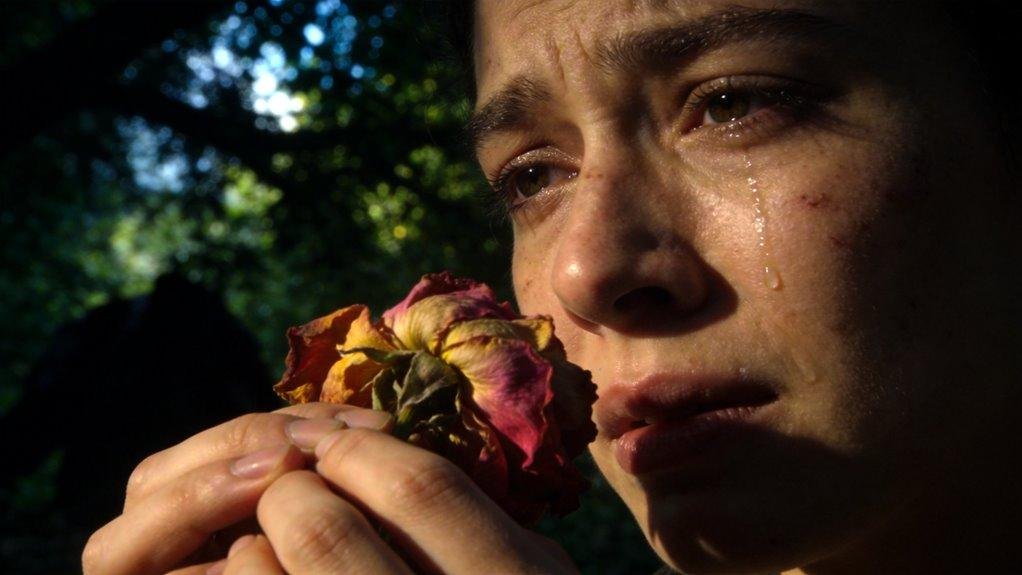
We all experience suffering, often shaped by past trauma, social isolation, and lifestyle choices.
It’s like carrying a backpack of burdens, heavy and sometimes overwhelming.

But remember, just like a good Netflix series, there’s always hope for a happy ending!
Engaging with loved ones or even taking a stroll can lighten that load.

Spiritual practices can also provide comfort and strength.
If we examine these parts of our lives together, we might uncover paths to healing and resilience.
Key Takeaways
- Suffering often originates from a mix of personal experiences, social environments, and biological factors influencing mental health.
- Past trauma and stress can create enduring burdens, but healing is possible as many do not develop chronic issues.
- Social isolation exacerbates feelings of worthlessness, increasing the risk of anxiety and depression.
- Lifestyle choices, including poor sleep, inactivity, and diet, can significantly hinder emotional well-being.
- Spirituality can provide hope and community support, promoting resilience and a sense of purpose amidst struggles.
Understanding the Root Causes of Your Mental Pain
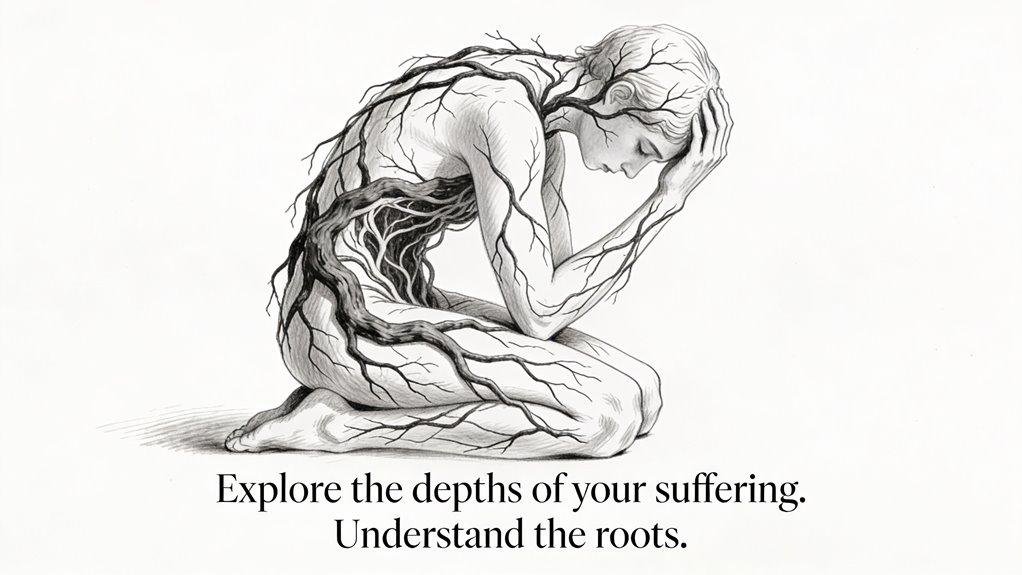
When we look at the roots of our mental pain, it’s essential to recognize that this often stems from a mix of life events, our social environment, and even our biology. Our personal struggles, like dealing with anxiety or maneuvering family relationships, play a significant role. Cultural influences, such as societal norms or political unrest, can amplify our experiences. Also, let’s not forget the genetic predispositions that can affect our emotional well-being. It’s like having a complicated recipe, it’s not just one ingredient that makes the dish. Understanding that current mental health provisions in Ireland remain severely under-resourced highlights the systemic challenges many face in navigating their mental health journeys.
How Past Trauma and Stress Affect Your Mental Health?
Past trauma and stress can feel like a heavy backpack that we carry through life, often burdening us down in ways we might not even realize. When we look at the stats, it’s striking: 70% of us experience trauma exposure at some point.
This can lead to persistent challenges, like the sad truth of PTSD prevalence; around 6.8% of U.S. adults face it. It’s not just numbers; these experiences can encourage anxiety and depression, like unwelcome guests at a party. If we recognize these patterns and open up about our experiences, we take the initial step toward healing. Engaging in therapy or supportive communities can lighten that load, allowing us to investigate life with a little more joy and a lot less weight upon our shoulders. It’s crucial to remember that less than 10% of those affected develop chronic long-term mental health problems, highlighting that hope and healing are within reach.
The Impact of Social Isolation on Your Well-Being
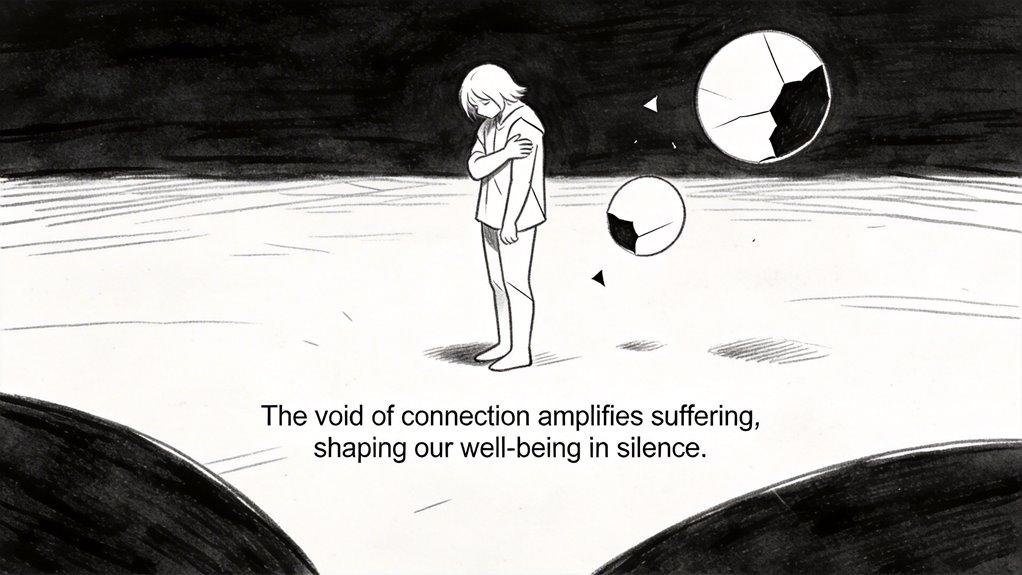
Social isolation can feel like a thick fog rolling in, obscuring our connection with the world and people around us. When we lack social connections, our emotional resilience tends to wane, and we may find ourselves battling feelings of worthlessness and sadness. It’s no surprise that increased loneliness can spiral into anxiety and depression. Social isolation is associated with increased risks of depression, anxiety, and cognitive decline.
We might end up avoiding social interactions altogether, which only intensifies our isolation. But here is the good news: we can combat this fog together. Reaching out to loved ones, engaging in community activities, or even joining hobby groups can reignite those connections. Remember, we’re not alone in this; many face similar struggles. Let’s take small steps, break the cycle, and brighten our worlds one connection at a time.
Lifestyle Choices That Negatively Impact Your Mental Health
Many among us might not realize how our daily habits shape our mental health until we find ourselves in a funk, struggling with feelings of anxiety or sadness. Poor sleep, physical inactivity, and an unhealthy diet can sneak up on us, acting like unwelcome guests at a party. Notably, the prevalence of poor mental health is significant among college students, indicating that lifestyle choices play a crucial role in our emotional well-being.
When we skip meals or indulge in processed foods, our mood takes a hit. Add substance abuse and irregular schedules, and this is a recipe for disaster. Let’s try prioritizing restful sleep and carving out time for some physical activity; remember, a brisk walk can do wonders!
If we welcome balanced meals and ditch harmful substances, we can greatly enhance our mental well-being. This is never too late to make positive changes!
How Spirituality Can Help in Overcoming Mental Struggles
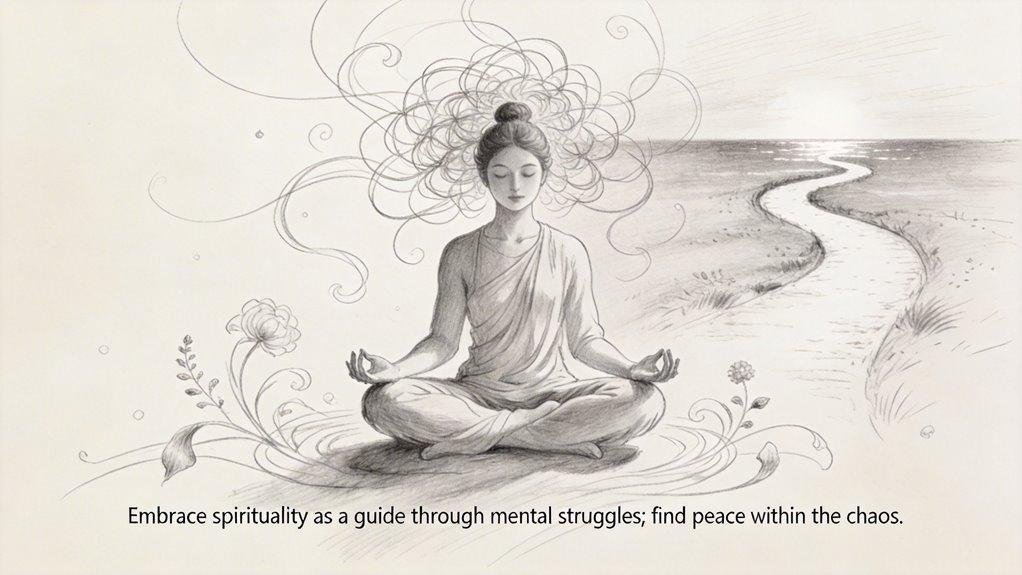
When we find ourselves contending with mental struggles, it can be easy to overlook the power of spirituality as a potential guiding light of hope. Engaging in spiritual practices not only lowers anxiety and depression but also nurtures resilient coping skills. This aligns with research showing that spirituality positively impacts mental health outcomes.
It’s incredible how community support within spiritual environments can strengthen our mental health, making us feel less alone.
| Benefit | Impact on Mental Health | Example of Spiritual Practice |
|---|---|---|
| Reduces Depression | Lower risk of clinical symptoms | Group prayer |
| Improves Coping | Increases resilience | Meditation |
| Lowers Anxiety | Reduces panic attacks | Mindfulness techniques |
| Promotes Purpose | Provides meaning to struggles | Attending spiritual services |
| Cultivates Community | Builds connections and support | Group volunteering |
Embracing these elements can truly uplift us throughout our experience.
Frequently Asked Questions
Can Physical Health Issues Worsen Mental Health Conditions?
Yes, physical health issues can indeed worsen mental health conditions. Chronic illness often leads toward mental fatigue, creating a cycle that impacts our overall well-being. We must recognize that connection and seek balance through healthy habits.
How Does Drug Use Affect Emotional Stability?
Drug use profoundly impacts emotional stability by undermining our ability to regulate emotions. Substance dependence leads us toward swinging between euphoria and despair, making the endeavor challenging to find balance or genuine satisfaction in daily life.
Are There Specific Foods That Improve Mental Health?
Absolutely, specific foods can improve mental health. By focusing on nutrient-dense brain foods like leafy greens, fatty fish, and berries, we can support our mood and cognitive function, promoting overall psychological well-being in our lives.
Can Physical Injuries Lead to Changes in Mood?
Yes, physical injuries can greatly alter mood. Pain perception affects our mood regulation, often leading towards irritability and sadness. By recognizing that connection, we can better understand our emotional responses during recovery and beyond.
What Role Does Sleep Play in Mental Well-Being?
Sleep plays an essential role in our mental well-being. Sleep deprivation interrupts our circadian rhythm, leading to mood changes and increased anxiety, while encouraging a cycle that worsens both sleep and mental health. We need quality rest.
