

We often overlook the small joys life offers, like that perfect cup of coffee or a warm sunbeam.
Embracing gratitude for these little things can elevate our mood and well-being.

Just write down a few things that made you smile today, or send a quick thank-you message to someone who brightened your day.
Trust us, it’s like giving your happiness a booster shot!

Stay with us, and you’ll uncover even more ways to spark joy in your daily life.
Key Takeaways
- Embracing mindful moments allows you to appreciate daily joys, enhancing your overall sense of gratitude.
- Celebrating small victories shifts your focus towards positivity, fostering a more optimistic outlook on life.
- Jotting down one thankful thought daily can quickly boost your happiness and reinforce gratitude.
- Recognizing the beauty in nature and daily experiences nurtures emotional well-being and increases appreciation for life’s simple pleasures.
- Practicing gratitude in small ways strengthens relationships and promotes deeper connections with others, enhancing social satisfaction.
Why Practicing Gratitude Matters for Our Mental Health
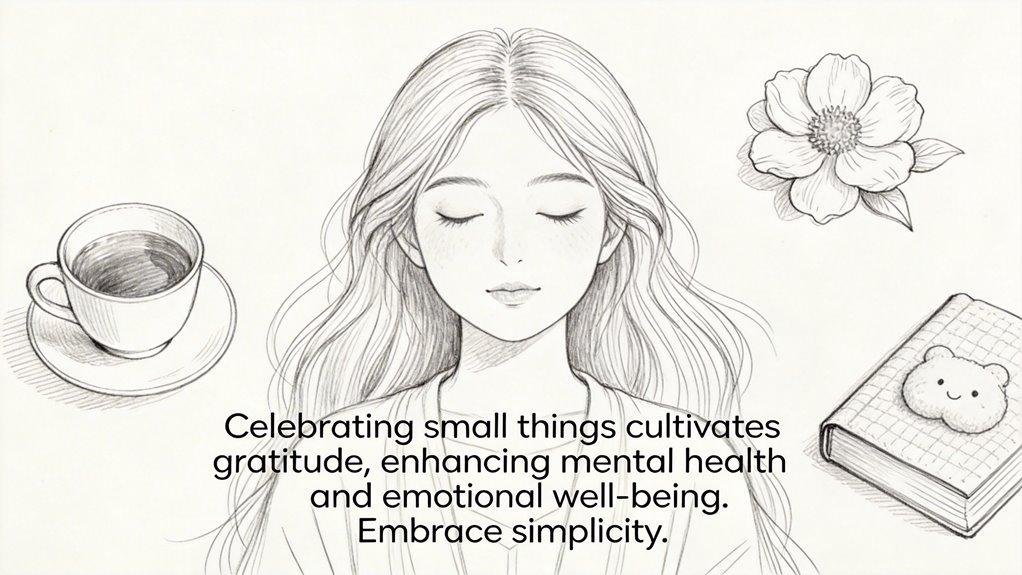
Gratitude, it’s not just a warm, fuzzy feeling; it’s a powerful tool that can change how we view the world and ourselves. When we practice mindful appreciation, we not only reduce anxiety and depression but also improve our overall mental health. Think about it: a simple act of gratitude can lead to a 35% drop in depressive symptoms, which is pretty remarkable! By focusing upon what’s positive, we take a break from worrying and ruminating. This shift nurtures emotional resilience, helping us bounce back from life’s challenges. So, let’s start small—maybe jot down three things we appreciate each day. Research shows that gratitude interventions can serve as a therapeutic complement in mental health treatment. Who knows? We might just find ourselves smiling more, feeling lighter, and enjoying life’s little moments a whole lot more!
How Gratitude Changes Your Brain Chemistry
When we take a moment to reflect regarding what we’re thankful for, we’re not just fluffing up our mood, we’re actually stirring a chemical reaction in our brains that can have a lasting impact regarding our well-being. Gratitude triggers neurotransmitter activation, enhancing dopamine and serotonin production. This leads to greater happiness and emotional stability. Additionally, gratitude activates key brain regions, which can further improve our emotional regulation and resilience in challenging situations.
| Neurotransmitter | Effect | Brain Region Response |
|---|---|---|
| Dopamine | Motivation & pleasure | Right frontal temporal cortex |
| Serotonin | Mood regulation | Medial prefrontal cortex |
| Oxytocin | Stress reduction | Hypothalamus |
| Endorphins | Pain relief | Varies |
| Norepinephrine | Focus & alertness | Brainstem |
Everyday Gratitude: Simple Ways to Find Joy
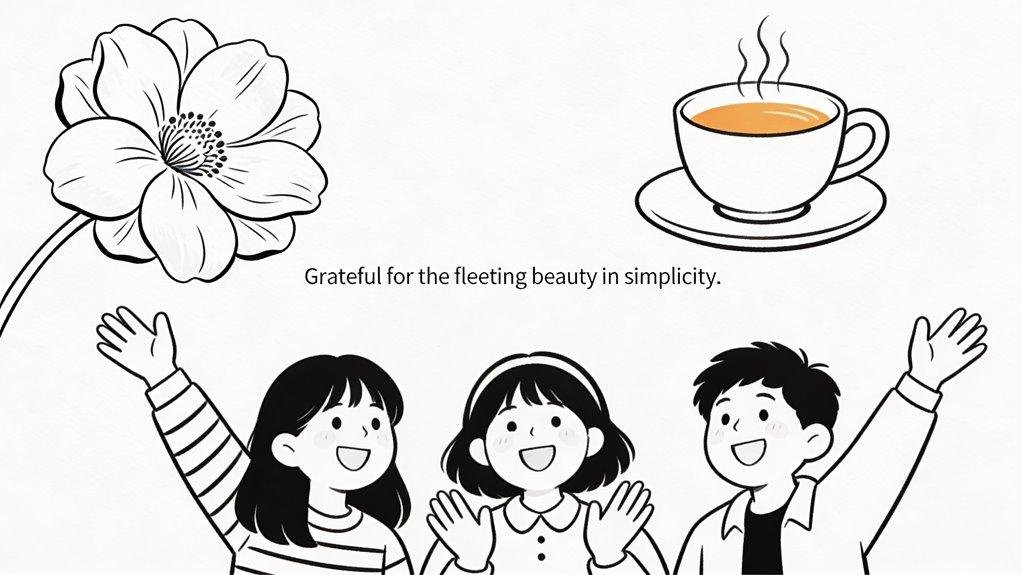
Finding joy in the everyday does not have to be an arduous battle. We can start right now by embracing mindful moments, like pausing to appreciate that initial sip of coffee or the warmth of sunlight upon our skin. Let’s make gratitude rituals part of our daily routine.
A simple thank-you message to someone can brighten both our day and theirs. Celebrating small victories, such as finishing a chore or enjoying a good conversation, can shift our focus towards the positive. Even jotting down one thing we’re grateful for can enhance our happiness in mere minutes. Research shows that simple daily gratitude practices improve overall well-being in children and adults alike. So, let’s sprinkle these practices throughout our day; it’s about cherishing life’s little blessings and finding joy in the ordinary. After all, who wouldn’t want a little more joy?
Gratitude: Key to Life Satisfaction and Well-Being
We often overlook how impactful gratitude can be in our overall happiness and well-being. Studies reveal a substantial positive correlation between gratitude and life satisfaction, meaning when we accept gratitude, we often experience increased positivity, hope, and happiness. Research has shown that gratitude interventions can significantly increase life satisfaction, providing a tangible way to enhance our emotional well-being.
Imagine waking up each day feeling a bit more optimistic simply because we focus on what we appreciate. Those gratitude benefits don’t just enhance our mood, they also reduce stress, anxiety, and even depressive symptoms. Practices like keeping a gratitude journal or sharing moments of thankfulness with friends can rewire our brains, improving our emotional resilience. Essentially, accepting gratitude can tremendously raise our quality of life, who wouldn’t want that? Let’s start cultivating that powerful habit together!
Techniques to Cultivate Gratitude in Daily Life

Cultivating gratitude in our daily lives is not just a feel-good exercise; this is a life-changing practice that can raise our everyday experiences. By incorporating grateful practices and engaging in gratitude challenges, we create a more positive mindset. Moreover, practicing gratitude can enhance emotional and physical wellbeing, leading to further improvements in our quality of life.
Here are some techniques we can try:
| Grateful Practices | Gratitude Challenges |
|---|---|
| Keep a gratitude journal | Write thank-you messages weekly |
| Pause to savor good moments | Share daily gratitude with others |
| Use a gratitude jar | Reframe negative situations |
| Express thanks daily | Challenge each other in groups |
Let’s sprinkle gratitude through our routine, like confetti. By being mindful and appreciating the little moments, we enhance our connection to life. Together, let’s make gratitude a lively part of our daily experience.
Benefits of Daily Gratitude
When we welcome daily appreciation, this is like revealing a treasure chest filled with health and happiness just waiting to be discovered. Practicing gratitude, even through small gestures, such as jotting down what we’re thankful for, brings extraordinary benefits. Studies show it enhances our mood, reduces anxiety by almost 8%, and even helps us sleep better.
Imagine waking up refreshed, all because we took a moment each day to appreciate life’s tiny wonders. These daily prompts keep our focus fixed upon positivity, shifting our viewpoint and brightening our outlook. Additionally, we find ourselves more inclined to assist others, creating a ripple effect of kindness. So, let’s accept gratitude, savoring those little moments that spark joy and improve our well-being.
Gratitude’s Role in Strengthening Relationships
Building strong relationships often requires more than just time spent together; this calls for a sprinkle of gratitude to truly improve our connections. When we express gratitude, we augment emotional connections, elevate relationship satisfaction, and nurture social bonding.
Think of it as a little trust building: when we appreciate others, they feel valued and are more likely to reciprocate. This reciprocity interaction creates a snowball effect, leading to positive feedback in our engagements. By sharing gratitude, we not only amplify empathy but also encourage generosity in time and effort.
Let’s practice gratitude expressions, whether through a simple thank-you or a heartfelt message. These small acts can revolutionize our relationships, making them more fulfilling and lively. After all, who doesn’t appreciate a little recognition?
How Gratitude Influences Physical Health Outcomes
When we think about gratitude, it is astonishing to realize how this can lead to longer, healthier lives and even better heart health. By simply jotting down a few things we appreciate each day, we not only lift our spirits but also support our hearts in ways we might not expect.
Let’s investigate how embracing gratitude can be a small yet powerful tool in enhancing our overall well-being!
Longer Lifespan Correlation
It’s extraordinary to think that something as simple as gratitude can actually influence our health in significant ways. When we welcome gratitude, we’re not just feeling good; we’re potentially adding years to our lives.
Research shows a 9% lower hazard of death from any cause for those with high gratitude levels. Gratitude is linked to reduced inflammation and healthier cardiovascular markers.
Older adults report the highest levels of gratitude, benefiting from what we call gratitude longevity. The connection between gratitude and aging benefits doesn’t waver with age.
Improved Cardiac Functioning
Gratitude can do wonders for our hearts, in more ways than one. By practicing gratitude, we can elevate our cardiac resilience and nurture better overall heart health. Research shows that higher gratitude scores are linked to reduced inflammation and improved heart rate variability. These are key factors in maintaining a healthy heart.
Here’s a snapshot of how gratitude can improve our cardiac functioning:
| Gratitude Benefits | Related Health Outcomes | Actionable Steps |
|---|---|---|
| Reduces inflammation | Lower inflammatory biomarkers | Start a gratitude journal |
| Increases heart rate variability | Reduced cardiac risk | Reflect on three things daily |
| Improves self-efficacy | Better self-confidence for managing heart health | Share gratitude with others |
Let’s appreciate the small things, and watch how our hearts respond!
Tips for Maintaining a Consistent Gratitude Practice
Although life’s hustle can sometimes steal our focus, cultivating a consistent gratitude practice can help us truly appreciate the small joys that pepper our moments. Here are some tips to keep us in line with our gratitude rituals:
In the midst of life’s chaos, a gratitude practice can reveal the small joys that enrich our everyday experiences.
- Set a Regular Schedule: Aim for 1-3 sessions per week; it’s easier than feeling obligated daily!
- Mix It Up: Try different interventions, like letters or storytelling, to keep things fresh and engaging.
- Keep It Simple: Focus on just 1-3 items each session to enhance our emotional response.
- Use Apps: They’re perfect for jotting down positive experiences or expressing gratitude while moving.
Inspiring Stories: Transforming Lives Through Gratitude
Finding joy in the little things isn’t just a nice idea; this is a life-altering practice. Just look at some life-changing stories of people who welcomed gratitude, like a woman who started jotting down three things she was thankful for each day. Surprisingly, she reported feeling 10% happier within a week!
We’ve all faced tough times, but shifting our focus can lead to impactful experiences. Research shows gratitude can alleviate symptoms of anxiety and depression while enhancing self-esteem. So, let’s make it a habit!
Whether it’s admiring a sunny morning or sharing a smile, these small moments can redesign our lives. Together, we can nurture gratitude, lighting a path toward joy, no matter how dim things seem.
Frequently Asked Questions
Can Gratitude Help in Resolving Conflict With Others?
Absolutely, gratitude can improve conflict resolution by nurturing empathy development. When we express gratitude, it reduces defensiveness, encourages collaboration, and strengthens our bonds, making it easier to manage disagreements and find common ground together.
How Does Gratitude Affect Physical Pain Perception?
Gratitude research shows that when we practice gratitude, we can lower our pain perception and increase tolerance. By shifting our mindset, we actively improve our overall well-being and mitigate the discomfort we experience physically.
Is Gratitude Linked to Improved Productivity at Work?
Absolutely, gratitude’s linked to enhanced workplace efficiency! By keeping gratitude journals, we elevate our motivation and collaboration, leading to higher productivity. When we express appreciation, we create a positive atmosphere beneficial for everyone involved.
Can Gratitude Practice Benefit Children and Adolescents?
Yes, we can benefit children and adolescents through gratitude practices like mindfulness techniques and expressive writing. These activities enrich emotional resilience, improve well-being, and cultivate positive relationships, helping them steer through life’s challenges with greater strength.
What Are Common Misconceptions About Gratitude Practices?
We often misunderstand gratitude, thinking that it’s just superficial gratitude or obligatory appreciation. It’s more than that; true gratitude enhances our lives, nurturing resilience and profound connections while rejecting toxic positivity and blind optimism.
