

If you’re struggling with insomnia, we know how tough it can feel.
Let’s start by establishing a regular sleep schedule and creating a calming bedtime routine, think warm baths and herbal teas.

Limiting screen time before bed can help too; those pesky blue lights aren’t doing us any favors!
Also, enjoy magnesium-rich snacks like almonds or calming drinks to promote sleep.

Together, we can investigate more strategies and tips to ultimately catch those elusive Z’s!
Key Takeaways
- Establish a consistent sleep schedule by going to bed and waking up at the same time daily to regulate your internal clock.
- Create a relaxing bedtime routine, incorporating warm baths, calming teas, or gentle stretches to signal your body it’s time to sleep.
- Limit screen time and blue light exposure at least 30 minutes before bedtime to enhance melatonin production and improve sleep onset.
- Design your sleep environment to be conducive to rest by keeping the room cool, dark, and quiet with comfortable bedding.
- Incorporate physical activity into your daily routine, as aerobic exercise can significantly enhance sleep quality and reduce nighttime awakenings.
Understanding Insomnia: Causes and Solutions
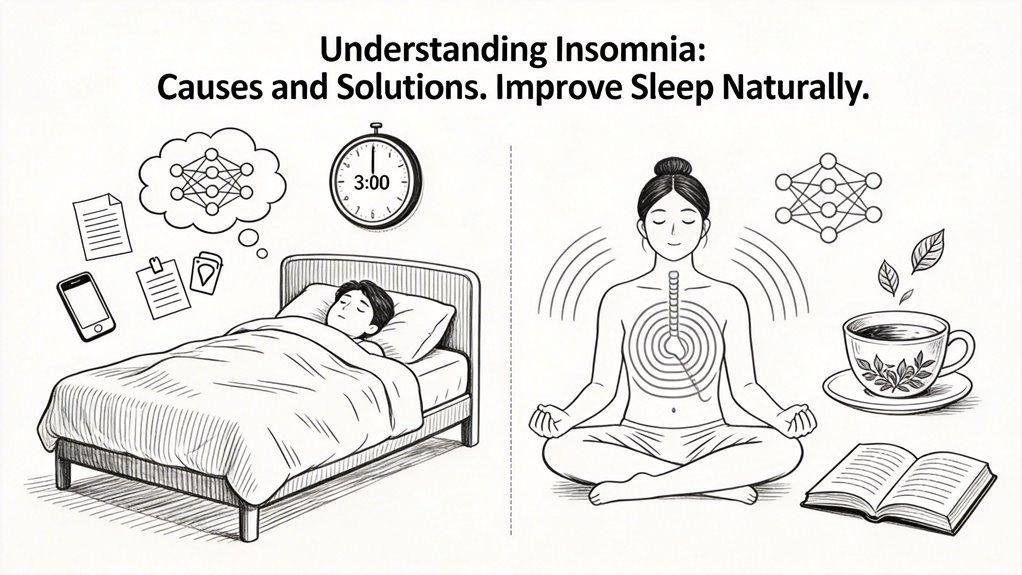
When it comes to understanding insomnia, we often find ourselves wrestling with both its causes and the solutions that might assist us in finding that elusive good night’s sleep. Psychological factors, alongside lifestyle habits, play a big role in sleep disorders like chronic insomnia. Additionally, chronic insomnia shows significant associations with increasing age and common comorbidities such as diabetes, which can complicate treatment options. Environmental influences, such as light and noise, can disturb our rest, while certain medications can exacerbate the situation. Relaxation techniques, cognitive therapy, and mindfulness practices are effective tools we can employ to ease our minds. Prioritizing sleep hygiene, like creating a comfortable sleep environment, often aids us considerably. By addressing chronic conditions, we can tackle insomnia more effectively. Most importantly, we must approach our struggles with humor and grace as we steer through these challenges together.
Establishing a Consistent Sleep Schedule
Establishing a consistent sleep schedule might sound like an old cliché, but setting regular sleep and wake times can truly make a world of difference for our overall well-being. When we prioritize sleep consistency, we’re not just following a routine, we’re investing in our health. Sleep consistency aids in syncing the body’s internal clock, making it easier to fall asleep quickly and wake refreshed.
Let’s adopt these simple strategies:
- Go to bed and wake up at the same time, even during weekends.
- Limit late-night snacks and screen time prior to bed.
- Create a calming atmosphere conducive for sleep.
- Track your sleep patterns and adjust whenever necessary.
- Allow yourself to relax and unwind as part of your bedtime habits.
Creating a Relaxing Bedtime Routine
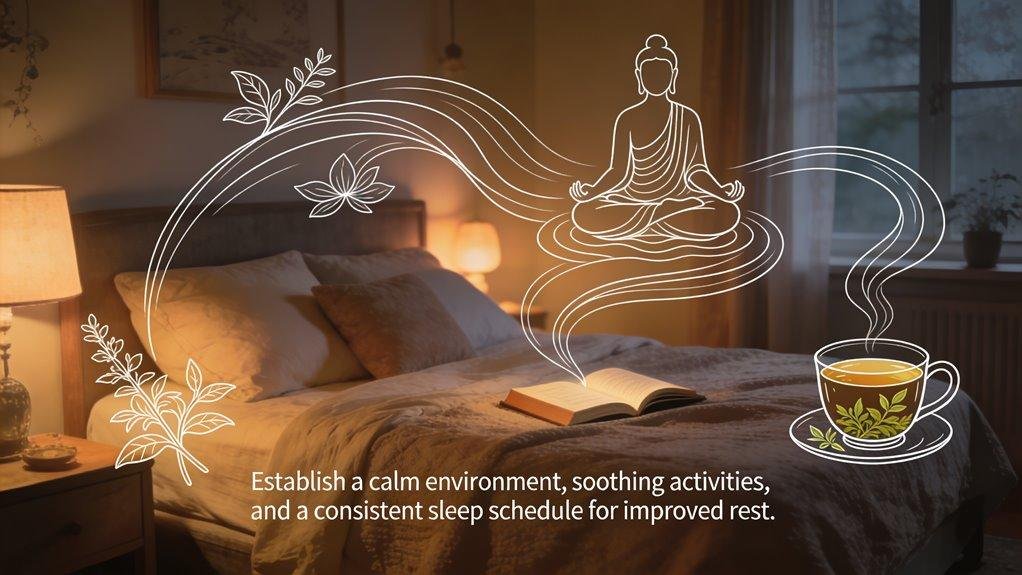
After we’ve set our sleep schedule, this is the time to cultivate a bedtime routine that makes drifting off feel as natural as breathing. Let’s start with a warm bath; the heat helps our bodies cool down, signaling that it’s time for sleep. Adding bedtime teas can improve relaxation, infusing our evenings with soothing flavors.
We might also incorporate gentle stretches or calming music; imagine the serene sounds of rain or waves transporting us toward tranquility. And don’t underestimate aromatherapy benefits: a few drops of lavender oil can change our space into a peaceful oasis. As we read or journal, we release our thoughts, clearing our minds for a restful slumber. It’s essential to be aware that poor sleep hygiene practices can contribute to insomnia, so let’s adopt these practices and say goodnight to insomnia!
Control Your Screens and Lights for Sleep
As we all know, screens can really mess with our sleep, and this is no joke! The blue light they emit can delay melatonin production, which means we might find ourselves tossing and turning when we should be snoozing. According to a study, increased screen time can lead to a 59% higher chance of insomnia symptoms for each additional hour spent on devices.
Importance Of Blue Light
While we all appreciate the convenience from our devices, we must recognize how blue light can be the mischievous culprit behind our sleep troubles. This invisible fiend messes with our melatonin and keeps us tossing and turning. Here’s what we should know:
- It suppresses melatonin secretion, delaying our sleep start.
- A couple of hours spent utilizing our screens can cut melatonin levels by over 50%.
Studies show blue light can lead to longer sleep latency and poorer quality sleep. Evening screen time causes late bedtimes and shorter sleep durations. Regular exposure might lead to long-term insomnia issues. Additionally, mixed impacts of blue light on performance and sleep quality highlight the need for careful management of screen time, especially in the evening.
Evening Lighting Practices
Creating a peaceful evening environment can be a game changer for our sleep. In order to improve our sleep efficiency, we should practice evening dimming by minimizing light intensity several hours prior to bedtime. Ambient lighting at or below 10 lx is ideal, as bright lights can cause melatonin disturbance, leading to longer sleep latency.
Let’s swap harsh screens for soft, blue-depleted light, which helps promote a restful atmosphere. We should control our pre-bedtime exposure by turning off screens 30 minutes before sleep. Remember, timing matters! Let’s set our lights to dim as the sun sets to support our circadian rhythms, ensuring we drift into dreamland more easily. With these steps, restful nights can become our new normal, no magic wand needed!
Managing Morning Sunlight
To truly employ the power of morning sunlight, we need to step outside soon after waking, letting that golden light envelop us without the barrier of screens or indoor lights. By embracing morning light, we can align our circadian rhythm and improve our overall well-being.
Here’s how to make the most of it:
- Spend at least 15-30 minutes outdoors post-sunrise.
- Enjoy a consistent morning routine embracing outdoor time.
- Allow sunlight exposure to regulate melatonin production.
- Experience an alertness increase and lower stress levels.
- Adjust your cortisol levels naturally to feel refreshed.
With just a splash of sunshine, we can improve our sleep quality, feel lively, and tackle the day with enthusiasm. Let’s commit to this bright adjustment!
Foods and Drinks to Promote Sleep
Let’s investigate some tasty options that can help us catch those elusive Z’s. Foods rich in magnesium and tryptophan, along with soothing herbal teas, can work wonders for our sleep routine.
Herbal Teas For Relaxation
When we find ourselves tossing and turning at night seeking that elusive quality sleep, herbal teas can be our comforting companions. They not only offer calming aromas but also bring numerous herbal benefits.
Here’s a selection of pleasing teas to regard:
- Chamomile Tea: A gentle sedative that promotes relaxation and better sleep quality.
- Valerian Root Tea: Known for its sleep-inducing properties, this beverage can reduce the time it takes to doze off.
- Lavender Tea: Its soothing aroma calms our nervous system and aids in restful sleep.
- Lemon Balm Tea: This citrusy drink eases anxiety and improves sleep when combined with other herbs.
- Passionflower Tea: A natural way to reduce anxiety and improve sleep quality.
Magnesium-Rich Foods
While we might think about sleep as something that just happens, the truth is that what we consume during the day plays a big role in how well we rest at night. Magnesium-rich foods can work wonders for our sleep, promoting muscle relaxation and calming our minds.
Here’s a quick look at some tasty options:
| Food Item | Magnesium (mg) per Serving | Benefits |
|---|---|---|
| Spinach | 156 | Supports GABA for relaxation |
| Almonds | 76 | Improves sleep quality |
| Pumpkin Seeds | 168 | Promotes profound sleep |
| Bananas | 32 | Lowers cortisol levels |
| Salmon | 30 | Regulates neurotransmitters |
Tryptophan Sources
Tryptophan might sound like a fancy name, but it’s just an essential amino acid that can help us catch those elusive Z’s. By including more tryptophan foods in our diet, we can experience some impressive tryptophan advantages, like improved sleep quality and longer nights of restful sleep.
Here are some delicious options to take into account:
- Turkey, the classic go-to for a sleep enhancement
- Oats and whole grain cereals, perfect for that cozy breakfast
- Bananas, a sweet snack that packs a punch
- Nuts and seeds, crunchy snacks that can help relax us
- Dairy products, like yogurt or milk, for a soothing bedtime treat
Let’s welcome these tasty foods and feel the difference in our sleep experience!
How to Incorporate Physical Activity for Better Sleep
Incorporating physical activity into our daily routines can feel challenging, especially after a long day. However, even small steps can lead toward significant improvements in our sleep quality. Let’s consider different types of activities that can help us sleep better:
| Type of Activity | Benefits |
|---|---|
| Aerobic Exercise | Enhances sleep quality dramatically |
| Resistance Training | Reduces nighttime awakenings |
| Mindfulness Techniques | Lowers stress and elevates relaxation |
Designing Your Optimal Sleep Environment
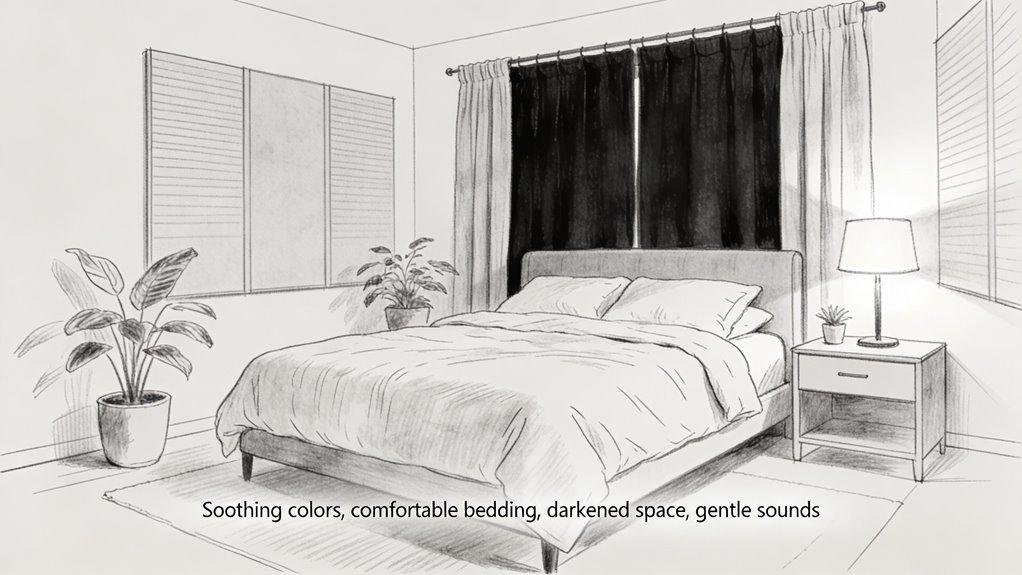
Creating the perfect sleep environment can feel like an intimidating task, but this is one among the most rewarding gifts we can give ourselves. By fine-tuning a few elements, we can drastically improve our sleep quality.
Here’s how we can design our ideal sleep space:
- Set the thermostat to an ideal temperature around 65°F (18.3°C).
- Block out light using heavy curtains or sleep masks, shade is our best friend.
- Accept noise control with earplugs or a white noise machine to keep disturbances at bay.
- Choose bedding that suits our unique comfort needs: soft, supportive, and inviting!
- Prioritize environmental quality by ensuring fresh air circulation and minimizing clutter.
Let’s make our bedrooms our personal sleep sanctuaries!
When to Get Professional Help?
Even with the perfect sleep environment we’ve just created, some among us may still find ourselves wrestling with insomnia that refuses to budge. If we’re experiencing symptoms like trouble falling or staying asleep, we should recognize the moment has arrived to seek professional help, especially if these issues persist for more than three nights each week over three months.
While many will respond to cognitive behavioral therapy, about 20-30% of us may face treatment barriers that require referral to a sleep specialist. If daytime fatigue or psychological distress becomes overwhelming, consulting our doctor is a smart step. Remember, asking for help isn’t a sign of weakness, it’s a step toward reclaiming restful nights and brighter moments!
Frequently Asked Questions
Can Naps Help With Insomnia or Worsen It?
Naps can help with insomnia if we keep them short, ideally under 30 minutes. By maintaining a consistent sleep schedule, we improve alertness without negatively impacting our nighttime rest, ensuring better overall sleep quality.
How Does Stress Impact My Sleep Quality?
Stress negatively impacts our sleep quality by interfering with our sleep cycles and increasing cortisol levels. By practicing stress management techniques and maintaining good sleep hygiene, we can help improve our overall sleep experience together.
Are Herbal Supplements Effective for Treating Insomnia?
Yes, herbal supplements can be effective for insomnia, but their efficacy varies. We should consider supplement safety as well, as some herbal options like valerian and chamomile show promise while being generally safe with minimal side effects.
What Relaxation Techniques Can I Try at Bedtime?
We can try breathing exercises and mindfulness meditation at bedtime to improve relaxation. By focusing upon our breath and cultivating awareness, we create a peaceful environment that promotes restful sleep and tranquility. Let’s adopt these techniques together!
How Long Does It Take to Reset My Sleep Cycle?
Resetting our sleep cycle generally takes several days to a couple of weeks, as we gradually adjust our sleep duration and patterns. Consistency and light exposure play vital roles in this process.
