


We’ve all felt that nagging pressure from societal milestones, making us feel like we’re lagging behind.
To tackle this, let’s redefine what success means for us personally, focusing upon our passions and relationships instead of comparing ourselves to others.

Practicing self-compassion and mindfulness can help us steer through these feelings.
Welcome your unique timeline, after all, life’s not a race!

If we take a moment to reflect, we can reveal more strategies to thrive in our expedition.
Key Takeaways
- Practice self-compassion by treating yourself kindly, acknowledging your unique journey, and reframing negative self-talk into positive affirmations.
- Cultivate resilience through mindfulness techniques, such as breathing exercises, to manage stress and enhance coping mechanisms for life’s challenges.
- Limit social media exposure to reduce comparison pressures; focus on personal growth rather than external standards set by others.
- Redefine success by recognizing personal achievements and enriching relationships, moving beyond traditional metrics to find fulfillment in your own life path.
- Seek supportive connections through peer support groups or counseling, allowing shared experiences to help combat feelings of isolation and anxiety.
Understanding the Pressure of Milestones
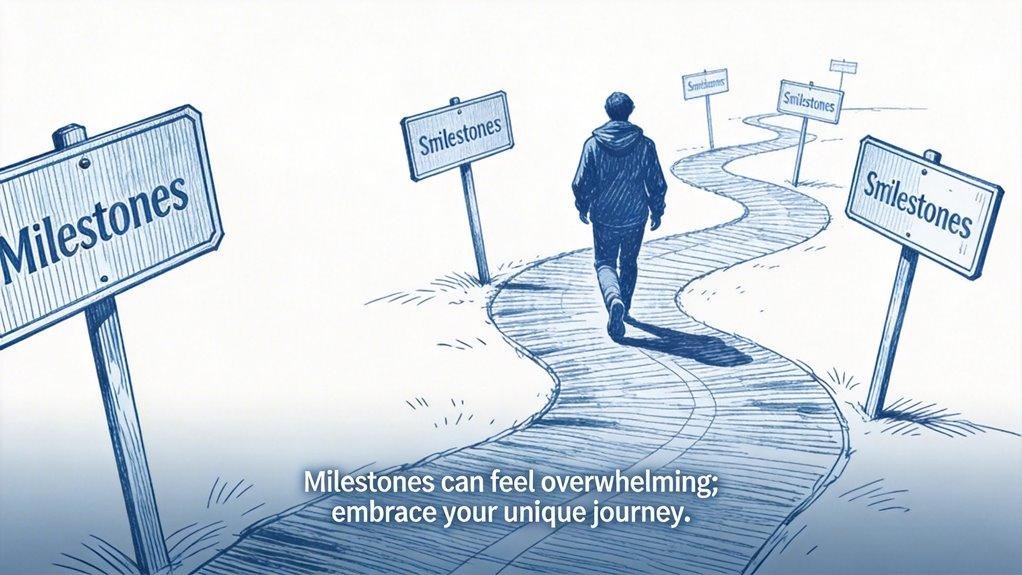
Life can feel like a crowded race, with milestones popping up like checkpoints along the way. We often face milestone expectations driven by social influence, making us question our paths. Whether it’s marriage, career success, or parenthood, we may feel the pressure to conform, wondering if we measure up. It’s easy to let these external standards define our self-worth. However, understanding that cognitive control plays a crucial role in how we manage our responses to these pressures can empower us to prioritize our individual journeys over societal expectations.
Identifying Milestone Anxiety Symptoms
Feeling the pressure from societal milestones can often lead to anxiety that creeps into various aspects of our lives. We might not even realize it at the outset, but recognizing the signs of milestone stress is vital.
The pressure of societal milestones can insidiously trigger anxiety, making it crucial to identify the signs of milestone stress early on.
Here are some common symptoms we should watch for:
- Physical signs: Racing heart rates, muscle tension, or those random bouts of nausea.
- Cognitive patterns: Ruminating over our perceived failures and catastrophizing if we don’t check off every box. Investing in yourself through personal growth activities can help alleviate these symptoms.
- Emotional indicators: Lingering dread about achieving life goals or panicking when facing certain milestones.
- Behavioral changes: Avoiding stress-inducing situations or seeking constant reassurance from friends.
Exploring the Impact of Childhood Experiences on Mental Health
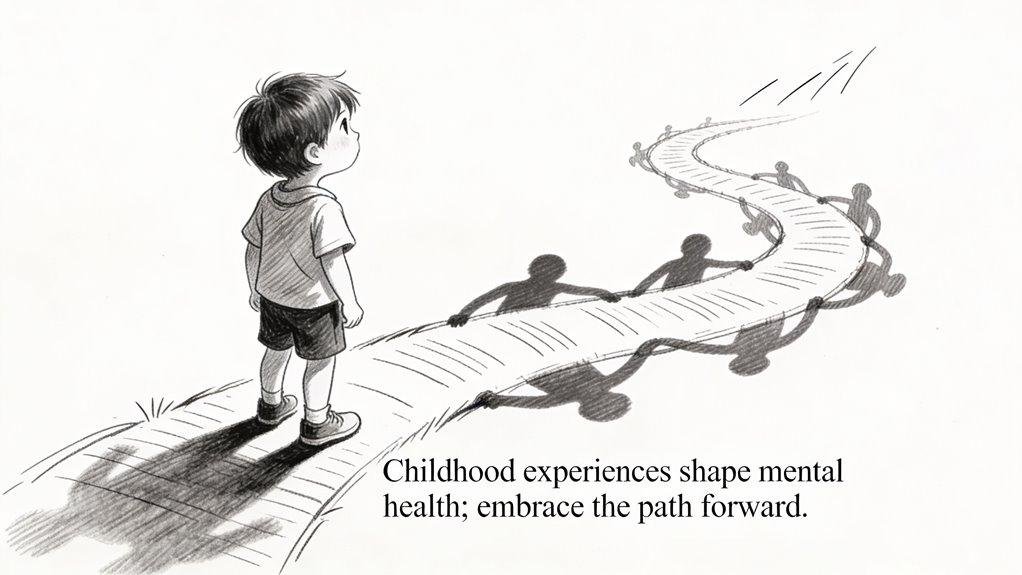
As we investigate how childhood experiences shape our mental health, it is important to recognize how feelings of being left behind can often trace back to those formative years. We might have faced tough challenges, like emotional neglect or even trauma, which can follow us into adulthood. Understanding these can help us build resilience. Support from funding sources can also play a crucial role in making mental health services more accessible and beneficial for individuals working through these past experiences. Let’s remember that, just like a plant needs the right conditions for thriving, we too can nurture our mental well-being and grow beyond our past.
Left-Behind Experience Effects
Steering through the turbulent waters of childhood experiences can stir up a multitude of emotions, leaving many of us feeling a bit rudderless in our expedition through life. The effects of feeling left behind can strike profoundly, shaping our mental health in various ways. Here are a few things to reflect upon:
- Emotional scars: Many carry childhood wounds that influence adult relationships and self-esteem. Unresolved trauma can also lead to chronic physical illnesses, affecting overall well-being.
- Coping strategies: We can learn new ways to deal with difficult emotions, like mindfulness and healthy communication.
- Healing expeditions: These can be lengthy, but every step forward matters.
- Support systems: Surrounding ourselves with understanding friends and professionals can cultivate growth.
Together, we can steer through these waters, finding hope and resilience in our shared experiences. Let’s welcome the expedition!
Childhood Trauma and Resilience
Steering through the maze within childhood experiences highlights just how significant our early life shapes our adult selves. We may have faced childhood adversity, feeling like we were trapped in a never-ending loop. But acknowledging our trauma is the initial step in trauma recovery. It’s essential to understand that our past doesn’t have to define us. By seeking support, whether through therapy, community, or even supportive friends, we can build resilience. A lack of healthy attachments during childhood can increase vulnerability to stress and emotional dysregulation, making it all the more important to nurture environments that promote healing, like prioritizing self-care or reaching out when we need a hand.
How Social Media Makes Us Compare Ourselves
In a world where we constantly scroll through the highlight reels of others’ lives, it is no wonder we start comparing ourselves to what we see. Let’s be truthful: those perfect vacation pics and dreamy accomplishments often hide the messy realities behind them.
Together, we can learn to escape the pressure of digital perfection and appreciate our unique expeditions instead, because life isn’t a competition, it’s a personal quest!
Social Comparison Dynamics
As we scroll through our social media feeds, it’s easy to feel like everyone else has that all figured out, while we’re just trying to keep our coffee from spilling all over our lap. With so many online platforms, we might find ourselves caught in social comparison traps.
Let’s reflect on a few things:
- Recognize the stats: 93% of us compare ourselves online, often leading to feelings of inadequacy.
- Understand comparisons: Regularly checking Instagram? We’re likely engaging in both upward and downward comparisons.
- Acknowledge feelings: Upward comparisons can hurt our self-esteem and happiness.
- Shift focus: Instead of comparing, let’s appreciate our unique experiences.
Navigating social media can be tricky, but we can inspire each other to find joy in our own paths.
Highlight Reel Illusion
Scrolling through endless feeds, we often find ourselves enchanted by the polished highlights from our friends’ lives. This highlight reel psychology creates a misleading perception that everyone’s living a dream life. In reality, we all have ups and downs. We might see stunning beach photos, but behind those smiles are nights spent cramming for exams.
By recognizing the crafted nature of social media authenticity, we can stop comparing ourselves to edited versions of others.
| Post Type | Reality | Emotional Impact |
|---|---|---|
| Beach Photo | Stress-filled week | Increases FOMO |
| Study Vlog | Solo studying | Drops self-esteem |
| Family Gathering | Arguments | Causes self-doubt |
| Party Snap | Boring night | Sparks jealousy |
| Travel Pic | Coordinated chaos | Creates unrealistic expectations |
Let’s keep in mind everyone has their battles!
Escaping Digital Pressure
When we plunge into social media, one can easily feel as though we’re peering through a window into everyone else’s perfect life while our own seems a bit chaotic. To escape that digital pressure, we can try:
- Engage in a digital detox, take a break from social media. Your mental health deserves it!
- Practice mindful consumption, choose the content we consume carefully. Focus on accounts that uplift rather than drag us down.
- Limit time spent online, set a timer! Just because everyone’s posting doesn’t mean we need to scroll endlessly.
- Reflect on our path, compare ourselves with our past selves instead of others. Personal growth is the real victory!
Together, let’s welcome our unique experiences and celebrate our quirks!
Creating Personal Timelines to Combat Milestone Anxiety
Creating personal timelines can be an enabling way to tackle that nagging feeling regarding milestone anxiety. By engaging in milestone mapping, we can visualize our expedition and gain insight into our lives.
Let’s imagine a timeline that stretches from our birth to the future, allowing us to float above it and revisit critical moments. We can identify events that shaped our thoughts and feelings, releasing any negative emotions along the way. This process not only highlights gaps in our timelines but also helps us reinforce positive beliefs about ourselves.
As we construct our personal timelines, we uncover a clearer path toward the future we desire, reminding us that life’s voyage is unique, and that’s perfectly okay. So let’s get started!
Cultivating Self-Compassion Strategies
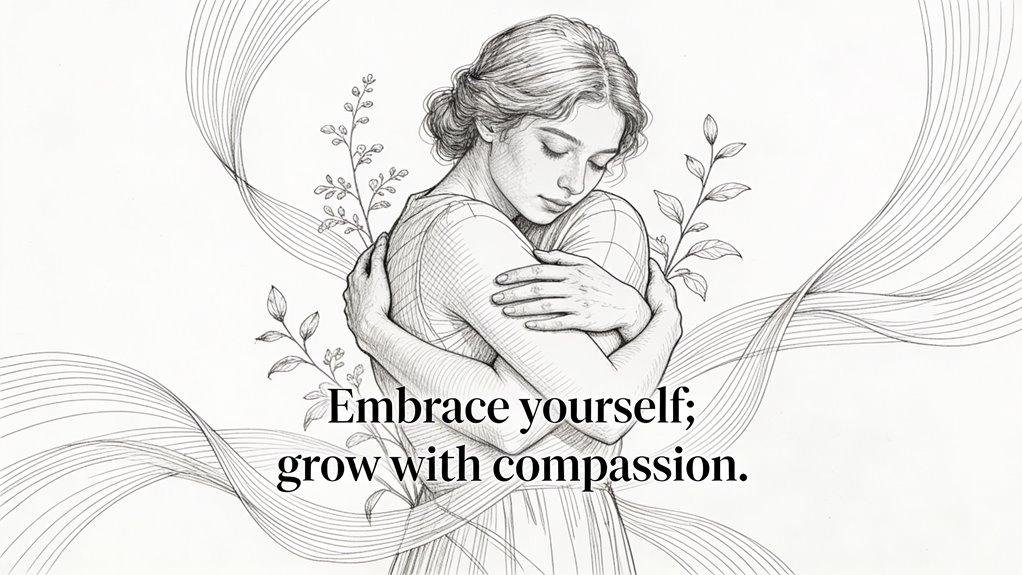
Even though we all experience moments regarding self-doubt, embracing self-compassion can be a game changer in how we steer those feelings. Let’s nurture self-kindness practices and engage in mindful coping together.
Here are some strategies we can implement:
- Practice Self-Kindness: Instead of being harsh towards ourselves, let’s talk to ourselves as we would to a dear friend.
- Share Our Struggles: Recognizing we’re not alone can lighten our burdens.
- Mindful Reflection: Take a few moments to breathe and observe our thoughts without judgment.
- Positive Self-Talk: Replace negative thoughts with affirmations that encourage growth and resilience.
Developing Resilience Through Mindfulness Practices
Building on our expedition of self-compassion, we now direct our focus towards developing resilience through mindfulness practices. Mindfulness techniques, like concentrating on our breath or simply observing our thoughts, enable us to better cope with adversity.
When we accept these practices, we nurture resilience that makes us more flexible and less prone to obsessing over setbacks. Just imagine taking a profound breath amidst chaos, that’s a simple yet powerful act! Research shows mindfulness helps lower stress and enhances mental health, making it easier to steer through life’s ups and downs.
Finding Effective Support for Mental Health
How can we truly find the support we need for our mental health? It’s vital to investigate various support networks and therapy options.
Together, let’s consider four effective ways to secure the help we deserve:
- Peer Support Programs: They offer a sense of community, helping us tackle feelings we may struggle with alone.
- Digital Mental Health Interventions: Apps focused on CBT and mindfulness can guide us through tough times and promote engagement.
- School-Based Initiatives: These programs improve emotional resilience and prevent substance misuse, particularly among students.
- Emerging Technology: AI-driven support can complement traditional therapy, who knew a chatbot could lend an empathetic ear?
Redefining Success: Embracing Your Unique Journey
While many of us often feel pressured to measure our success against conventional yardsticks, it’s crucial to keep in mind that embracing our unique paths is what truly defines us. Let’s face it, success isn’t just about fancy job titles or hefty paychecks. It’s about our personal evolution and the dreams we pursue.
Maybe for us, success means joyfully chasing hobbies that light us up or cultivating rich relationships that bring meaning. We can redefine success by recognizing our individual expeditions and celebrating our wins, big and small. So, let’s ditch those outdated comparisons. Instead, let’s focus upon what makes us feel fulfilled and satisfied. Embracing our unique success is the key for a happy, authentic life. Let’s do this together!
Frequently Asked Questions
How Can I Cope With Societal Pressure to Achieve Milestones?
To cope with milestone anxiety, let’s focus on our unique expeditions instead of peer comparison. We can share our experiences, support one another, and welcome the idea that everyone progresses at their own pace.
What Are Some Signs I Should Seek Professional Help?
If we notice persistent emotional distress, significant changes in behavior, or overwhelming feelings regarding hopelessness, this moment is right for seeking professional guidance. Recognizing these signs can lead us in the direction of healthier coping mechanisms and support.
Can Hobbies Help Reduce Feelings of Being Left Behind?
Engaging in hobbies enhances our well-being through creative expression, reduces stress, and nurtures connections. Together, we can accept these hobby benefits to develop joy, build relationships, and feel more present in our lives.
How Do I Rebuild Social Trust After Negative Childhood Experiences?
To rebuild social trust after childhood trauma, we can engage in trust building exercises together. By practicing open communication and establishing limits, we cultivate safer connections that support our recovery and strengthen our relationships moving forward.
What Are Effective Ways to Reframe My Personal Expectations?
We can effectively reframe our personal expectations by embracing expectation management that aligns with our values. Let’s identify unrealistic standards, challenge them, and focus upon progress, recognizing our achievements as significant steps towards growth.
