


Hugs are super important for our well-being! They strengthen our connections, enhance happiness, and relieve stress, all from a simple hug.
When we hug, we release oxytocin, that magic hormone that calms us. Just think about it: a good hug can turn a tough day around!

If we aim for a few hugs each day, we’ll not only feel better, but also build trust and connection with those we care about.
Keep going with us to investigate more about this wonderful practice!

Key Takeaways
- Hugs strengthen emotional bonds and intimacy between individuals, fostering deeper connections in relationships.
- The act of hugging releases oxytocin, promoting calmness, happiness, and reducing stress levels.
- Regular hugs can enhance immune function, lower blood pressure, and combat illness severity.
- Hugs serve as effective tools for improving emotional health by reducing depression and anxiety through physical affection.
- Incorporating daily hugs can enhance overall wellness, providing a simple yet powerful method for stress relief and emotional uplift.
Why Hugs Are Important for You

When we think about the simple act of hugging, it’s easy to underestimate its power. Those heartfelt hugs aren’t just warm and fuzzy; they’ve got serious hugging benefits we shouldn’t overlook. Each hug strengthens our emotional connection, nurturing intimacy and cultivating trust in our relationships.
Isn’t it astonishing how a simple gesture can buffer us against stress and combat feelings of anxiety? When we hug, our bodies release oxytocin, that charming hormone that makes us feel calm and happy. Imagine holding someone right after a tough day; it can turn everything around! Research shows that receiving a hug mitigates decreases in positive affect during interpersonal conflict. So, let’s make hugging a regular part of our lives. Whether it’s a quick squeeze or a longer hug, let’s cherish these moments and share this simple, yet powerful, tool for connection.
Key Health Benefits of Regular Hugging
Although we often think of hugs as mere expressions of affection, they actually hold a wealth of health benefits that many of us might overlook. Research shows that hugging benefits our health by reducing stress and enhancing our immune systems. For example, when we hug, our bodies release oxytocin, calming us down, who knew a squeeze could do so much? Additionally, hugs can reduce stress by deactivating areas of the brain involved in the stress response.
Daily hugs can even lower blood pressure and reduce inflammation. Additionally, they help us fend off colds and lessen illness severity, especially during stressful times. So, let’s make hugging a regular habit! Next time you see a friend or loved one, wrap them in a warm hug. Remember, a little affection can go a long way toward better health!
How Hugs Fuel Emotional Health
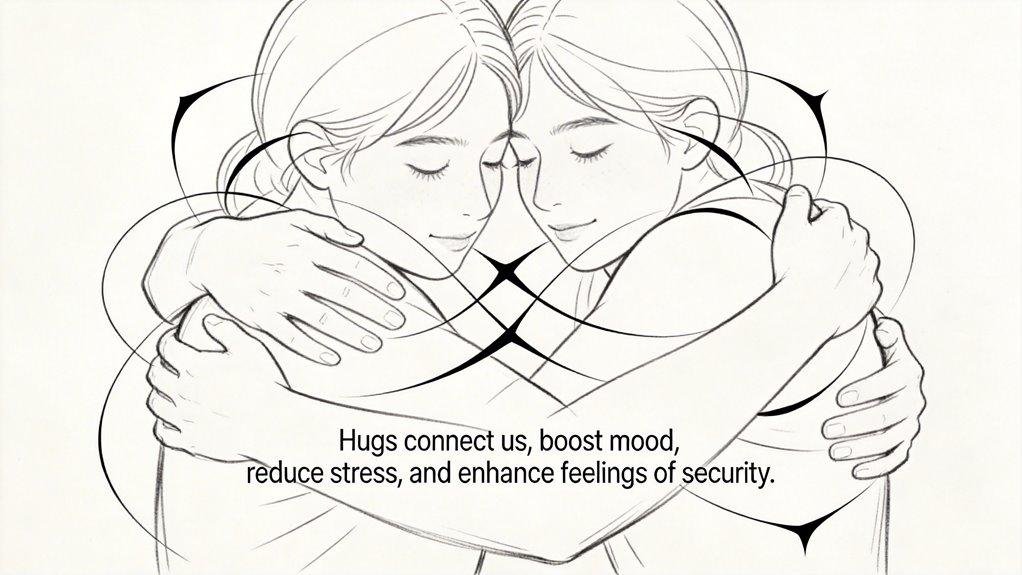
Hugs aren’t just a nice way to greet a friend or comfort a loved one, they’re also powerful tools for enhancing our emotional health. By embracing someone, we access an array of hormonal benefits that promote social bonding and emotional regulation.
- Oxytocin, the “love hormone,” builds trust and empathy.
- Hugs reduce cortisol, helping with stress reduction.
- Frequent hugs lead to a profound connection and lasting well-being. Additionally, regular physical contact through hugs can decrease feelings of depression and anxiety, further supporting emotional health.
Next time you’re feeling down, keep in mind that a tight bear hug can elevate those feel-good chemicals and make a world of difference. So grab a friend, squeeze them tight, and let those hormones work their magic. Your emotional health will thank you!
How Hugs Naturally Relieve Stress
It’s incredible how a simple squeeze can work wonders for our stress levels. When we hug, our bodies release oxytocin, that remarkable cuddle hormone, helping us feel safe and connected. Just a 20-second hug can lower cortisol, the main stress hormone, creating immediate stress relief.
Additionally, the more we cherish—our hugging frequency—the better we support our mental and physical health. In fact, regular hugs can also protect us from illnesses linked to stress! Research indicates that perceived support, especially conveyed through physical touch, can significantly protect against stress and its adverse effects. So, next time we’re feeling overwhelmed, let’s remember the power of a good hug; it’s like a mini vacation for our mind and body. Let’s spread some warmth, share those hugs, and feel the stress melt away! Who knew stress relief could be so effortless?
Ways to Include More Hugs in Your Daily Life
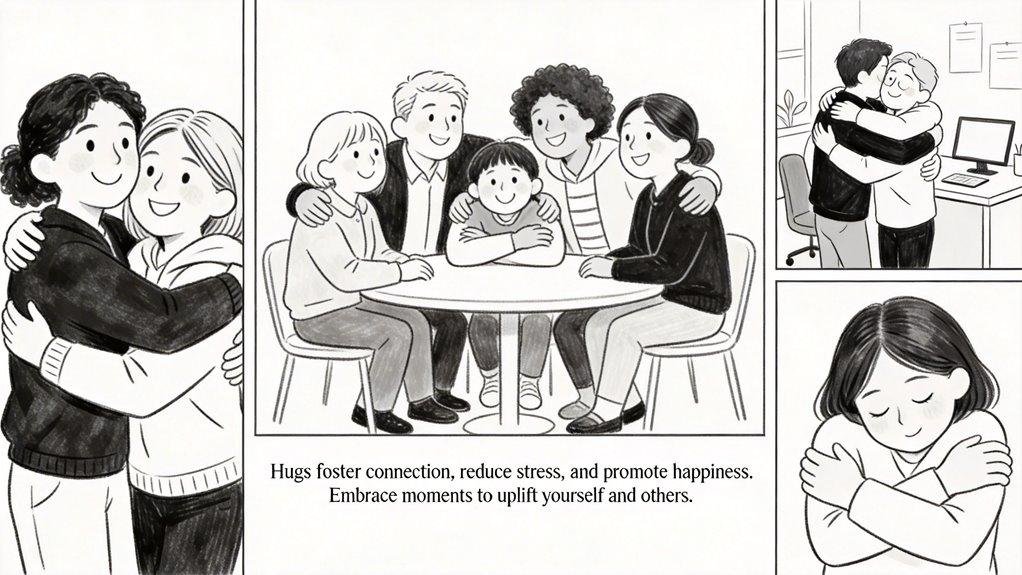
Daily life often gets busy, but we can easily weave more hugs into our routines if we make that a priority. Embracing hugging techniques can greatly improve our mental well-being. It also helps us maneuver social norms about affection. Here are a few easy ways to get started:
- Start with a trusted friend or family member: Aim for one to three hugs daily to uplift our mood! Research shows that daily hugging of one person is linked to lower odds of depression.
- Integrate hugs into everyday moments: Whether greeting someone or celebrating small victories, let’s make hugs a part of our interactions.
- Experiment with hug duration: Try extending our hugs to a cozy 10 or even 20 seconds for maximum benefits.
With a little effort, we can change our days, one hug at a time!
Frequently Asked Questions
Can Hugging Help With Chronic Pain Management?
Yes, hugging can help with chronic pain management by providing emotional support and relief. This stimulates oxytocin release, which reduces pain sensitivity, making us feel better physically and emotionally during tough times.
Are There Cultural Differences in Hugging Practices?
Absolutely, there are cultural differences in hugging practices. We maneuver varied hugging etiquette based upon cultural norms; from warm hugs in Latin America to reserved gestures in Asia, understanding these differences improves our global connections.
How Do Hugs Impact Interpersonal Relationships Long-Term?
Hugs improve relationship bonding and provide emotional support, creating stronger connections over time. By regularly embracing one another, we strengthen trust and intimacy, cultivating a nurturing environment that promotes long-lasting, resilient relationships.
What’s the History of Hugging in Human Connection?
Hugging’s historical significance spans cultures, rooted in ancient traditions that symbolize comfort and connection. We’ve seen hugs evolve from intimate gestures to powerful expressions of love, nurturing relationships across time and reminding us about our shared humanity.
Can Hugging Be Detrimental in Certain Situations?
Yes, hugging can be detrimental when consent issues arise or someone feels their personal space is invaded. We should always be mindful and respect others’ limits to promote genuine connections, ensuring everyone feels comfortable and safe.
