


We’ve all felt out of place at times, and it’s okay. Let’s tackle that together by finding meaningful connections.
Joining a club or volunteering not only fills our time but also nurtures friendships.

Remember, even a simple chat with a neighbor can spark a bond. Don’t shy away from tech; online groups are a goldmine for connection.
If you’re feeling down, reaching out is key. With a little effort, we can steer through feeling out of place.

Want to investigate more ways to connect?
Key Takeaways
- Acknowledge your feelings of disconnection and understand that loneliness is common and affects many individuals.
- Seek opportunities to connect with others through community activities and shared interests to foster a sense of belonging.
- Utilize technology to join online communities, enabling you to meet others who share similar interests and experiences.
- Engage in simple social interactions, like chatting with neighbors or attending local events, to build familiarity and ease feelings of being out of place.
- Regularly check in with friends or family, as open communication can provide support and clarity, enhancing your sense of connection.
Identifying the Roots of Loneliness
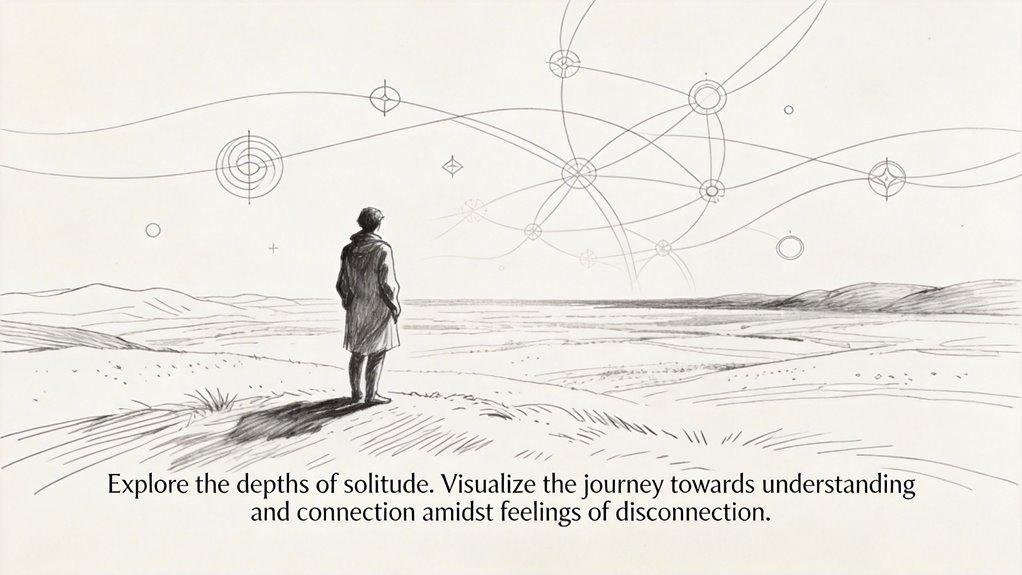
When we think about loneliness, this often feels like we’re trapped in a bubble, floating through life without anyone to share the adventure with. Many of us struggle with the intricacies of social interactions, feeling disconnected from groups that inspire friendship. Studies have shown that 67% of lonely adults don’t feel part of meaningful circles. Additionally, many respondents expressed feeling fundamentally disconnected from others or the world, highlighting the deep root of these feelings.
It’s a challenge, especially for younger folks. Building emotional resilience can help us traverse these feelings, reminding us that we can create new connections. Let’s prioritize time with friends and family, seeking out shared interests to nurture belonging. It’s okay to laugh at our awkward moments, they’re part of our story. Together, we can break the silence and redefine what community means in our lives.
The Connection Between Loneliness and Mental Health
We all know that feeling lonely can really mess with our mental health, turning simple moments into emotional rollercoasters. It’s surprising how loneliness can spark anxiety or even lead to more profound issues like depression, making us feel like we’re in a never-ending treadmill of meaninglessness. In fact, studies show that the overall loneliness prevalence is at 32.1%, highlighting how pervasive this issue is in our society.
But hey, recognizing this connection is the initial step. Let’s examine how we can support ourselves and each other through the ups and downs of life!
Loneliness and Anxiety Link
Feeling out of place can sometimes lead us into a familiar pit of loneliness and anxiety, but that doesn’t have to be the case. We all know that loneliness impacts our mental health considerably. It’s not just a fleeting feeling; it can double our risk of depression over time. In fact, studies suggest that loneliness correlates with an increased likelihood of developing mental health issues.
Yet, we have the power to manage anxiety by recognizing that connection. Engaging in social activities, even if they feel uncomfortable at the beginning, can help us break this cycle. Let’s challenge ourselves to reach out, even if it’s just a text to an old friend. Together, we can create our own support systems. Remember, connection doesn’t just lighten our load, it might also bring a smile and a chuckle along the way!
Depression Among Isolated Individuals
Isolation often creeps up on us, leaving a trail of loneliness that can feel heavy and suffocating. It’s important to realize that many of us face the risk of social isolation, which can double our odds of experiencing depressive symptoms. Studies show young adults, particularly women, are especially vulnerable to social isolation and withdrawal.
Just imagine feeling alone while your mind plays tricks, making it harder to connect. But here’s the good news: we can change this narrative! We can reach out to friends, engage in community activities, or even volunteer. By opening up and sharing, we can lighten that heavy feeling.
Let’s take small steps together; every connection we make improves our well-being. Remember, we’re not alone in this expedition!
Meaninglessness and Loneliness Relationship
While navigating the turbulent waters of loneliness, many among us stumble across an unsettling realization: this often intertwines with a profound sense of meaninglessness, casting a shadow over our mental health. It’s essential to understand how loneliness and a lack of social bonds create this cycle.
| Factor | Impact on Mental Health |
|---|---|
| Loneliness | Increases anxiety and depression |
| Lack of purpose | 75% report little or no meaning |
| Social support absence | 3 times stress and distress |
| Vulnerable groups | Higher loneliness rates |
| Existential awareness | Cultivates connections and meaning |
Recognizing our feelings is the initial step. By nurturing social bonds and seeking support, we begin to bridge the gap between loneliness and purpose. Notably, higher loneliness rates have been linked to poor mental and physical health outcomes in various studies. Let’s face these emotions together!
Identifying Triggers of Loneliness
At times, we can find ourselves grappling with emotions of solitude when we least anticipate it. To chart this emotional terrain, we need some trigger awareness. Here are three common triggers we might face:
- Technology Overload: Constant scrolling can make us feel more isolated than connected.
- Busy Lifestyles: When work takes over, we often forget to spend quality time with loved ones.
- Shrinking Social Circles: Losing those small daily interactions, even with familiar faces, can intensify our loneliness.
Building Relationships to Combat Loneliness
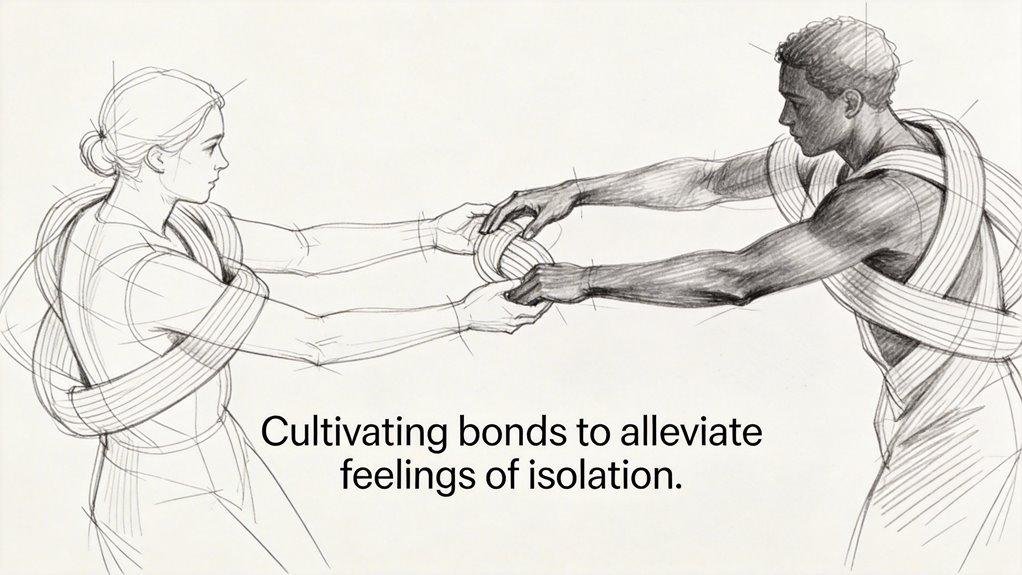
We all know that sensation of being disconnected from the world around us, but building meaningful connections can make a huge difference in how we experience loneliness. By getting involved in community activities, whether it’s joining a local group or volunteering at a nearby shelter, we can not only help others but also create friendships that enhance our lives.
Importance Of Meaningful Connections
Have you ever found yourself in a room full of people, yet felt completely alone? We all crave meaningful connections and know they offer crucial emotional support. Building these connections isn’t just nice; it’s fundamental.
Here are three ways we can improve our social engagement:
- Reach Out: Don’t wait for others to come to us; let’s initiate conversations. A simple “How’s it going?” can spark a connection.
- Join Groups: Whether it’s a hobby or a community service, engaging with like-minded people nurtures friendships and reduces feelings of loneliness.
- Be Vulnerable: Sharing our feelings can enrich relationships. Remember, it’s okay to say, “I’m feeling a bit off today.”
Let’s take these steps to forge meaningful ties and combat loneliness together!
Engaging In Community Activities
Feeling a bit disconnected? Let’s investigate engaging in community activities to cultivate those meaningful connections we all crave. When we participate, we not only combat loneliness but also build lasting relationships.
Here’s a quick look at some community opportunities:
| Activity Type | Description | Benefits |
|---|---|---|
| Intergenerational Projects | Team up with youth for arts or storytelling. | Strengthen cross-generational bonds. |
| Volunteer Opportunities | Share skills while making a difference. | Form new friendships. |
| Support Groups | Join clubs focusing around shared interests. | Find like-minded peers. |
| Structured Activities | Engage in recreational fun or therapy. | Reduce isolation effectively. |
When we step into these spaces, we pave the way to connection and joy. Let’s get involved and watch loneliness fade!
Practical Steps to Feel Connected
Connecting with others can often feel like maneuvering a maze, especially when we’re in a new environment or facing life changes. But with some mindful routines and neighborhood interactions, we can find our way.
Here are three practical steps to help us feel more connected:
- Schedule Regular Activities: Join book clubs or classes to turn strangers into familiar faces, trust us, trivia nights can lead to lifelong friendships!
- Engage with Neighbors: Initiate simple chats or participate in block parties, forming bonds over shared experiences.
- Cultivate Connections: Make time in our routines to reach out to friends and family, because who doesn’t love a surprise phone call?
Let’s welcome these steps together, nurturing connections that make us feel right at home!
Social Activities to Overcome Loneliness
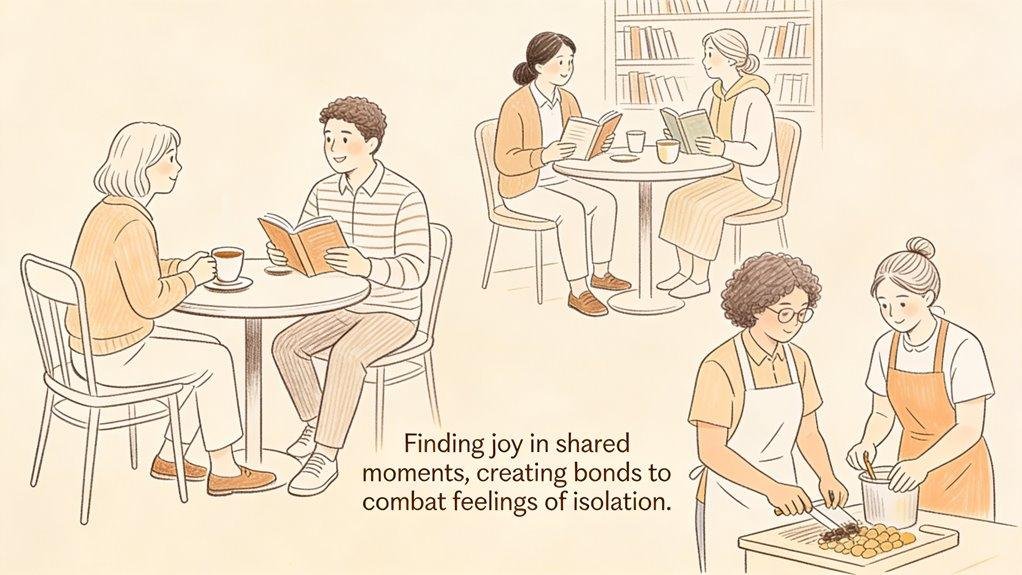
When we plunge into social activities aimed at overcoming loneliness, we often reveal hidden joys and connections we never anticipated. Group engagement through community involvement can be a transformative experience.
Think about joining exercise classes like Tai Chi, where we not only improve our health but also build social networks. The exercise benefits are not just physical; they help lift our spirits too! Virtual interactions can keep us connected even when we can’t meet in person.
Whether it is a hobby group or volunteering, these meaningful experiences create a sense of belonging. Let’s take small steps, greet a neighbor or join a local club. Together, we’ll combat isolation with laughter, creativity, and shared moments that remind us we’re all in these shared circumstances together!
Using Technology to Foster Connections
In a world where over 6 billion people are online, we’ve got a powerful tool at our fingertips to nurture connections and break down feelings regarding isolation. Technology can help us create meaningful digital friendships and engage in virtual hangouts.
Here are three ways to use this effectively:
- Join online communities that share your interests; there’s likely a group for everything!
- Schedule regular virtual hangouts with friends or family for game nights or movie streaming, no need to worry about wardrobe choices!
- Explore social media platforms to find new friends, as 95.58% of internet users actively engage online.
Let’s welcome the opportunities technology offers, we can bridge gaps and unite, even from afar!
Talking to Someone: When Should You Reach Out?
Feeling out of place can be tough, and while connecting online helps, sometimes the best remedy begins with a good heart-to-heart. It’s crucial to recognize when reaching out becomes necessary. If we’re feeling irritable, anxious, or consistently down, you know, those moments when our favorite snack just doesn’t hit the same, it’s time to reflect on talking tactics.
Sharing our feelings with a close friend or family member can lighten that load. Remember, it’s okay to seek help: nearly 57% of us feel comfortable sharing with friends. So, let’s be proactive; those conversations can bring clarity and healing. Let’s grasp the courage to reach out, because we’re not alone in this experience, and together, we’ll traverse the bumps ahead.
Frequently Asked Questions
How Can I Tell if I’m Experiencing Chronic Loneliness?
We can tell we’re experiencing chronic loneliness through persistent social withdrawal and emotional numbness. If we feel disconnected even in crowds or struggle with profound connections, this is a sign we need to address our emotions.
What Are the Signs That I Need Professional Help?
We see signs of depression when we struggle to concentrate, feel persistently sad, withdraw from social connections, or experience overwhelming emotions. If these echo, seeking support is essential for regaining our emotional well-being together.
Can Loneliness Affect Physical Health as Well?
Yes, loneliness can greatly affect our physical health. Social isolation not only harms our emotional well-being but also increases risks for chronic diseases, highlighting the importance in maintaining connections with others for our overall health.
How Does Loneliness Differ Across Age Groups?
Loneliness varies by age. In youth, childhood experiences shape connections, while middle age faces work stress. The elderly often encounter isolation, highlighting how differing life stages influence feelings in loneliness and social bonds.
What Resources Are Available for Those Feeling Lonely?
We can find comfort in online support and community groups. Let’s investigate forums and platforms together, where we can share experiences, connect, and build meaningful relationships that help combat loneliness and create understanding.
