


In order to enhance our bedtime routine, let’s begin with consistency. We should aim for the same bedtime every night, even during weekends, no late-night binge-watching!
Reducing screens an hour before sleep helps, too.

Let’s create a cozy environment, cool, dark, and quiet. We might enjoy a relaxing activity, like reading or meditating, for unwinding.
And if we encounter a few bumps along the journey, that’s okay! There are plenty of ways to manage them as we investigate further.

Key Takeaways
- Set a consistent bedtime schedule, including weekends, to promote stability and enhance overall sleep quality.
- Minimize screen exposure 1-2 hours before sleep to facilitate melatonin release and encourage restful sleep.
- Create a calming pre-sleep ritual with activities like reading or meditation to signal bedtime and improve relaxation.
- Ensure a comfortable sleep environment by keeping the bedroom cool, dark, and quiet to promote better sleep quality.
- Tailor bedtime practices according to age, addressing unique needs to support developmentally appropriate sleep routines.
Understanding the Importance of a Consistent Bedtime Routine
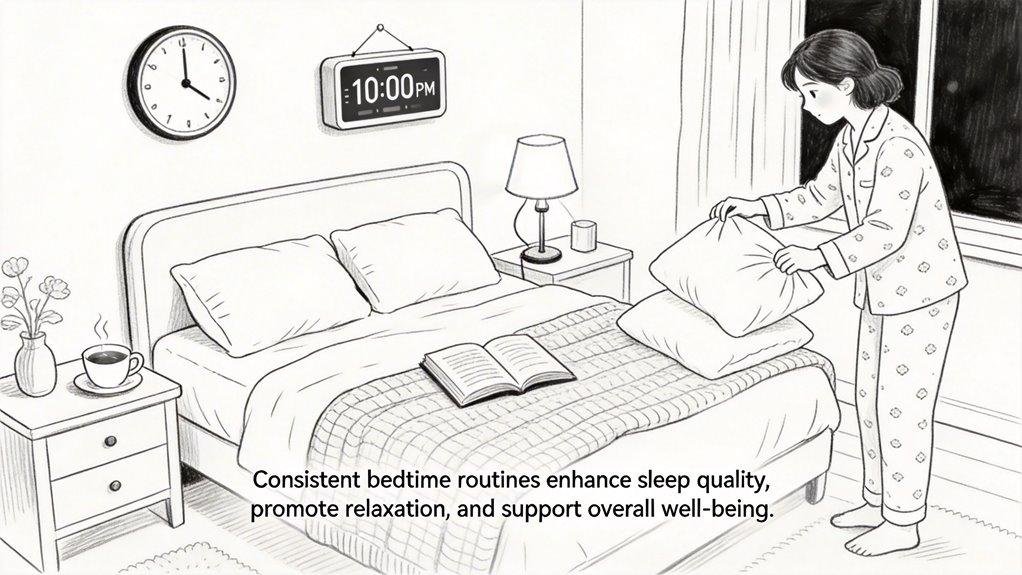
At the heart of a well-rested night lies the soothing hug from a consistent bedtime routine, much like a favorite cozy blanket that wraps us up in comfort. We can’t stress enough the bedtime importance, it’s not just about drifting off but also about the routine benefits it brings. For instance, when we stick to a consistent routine, we fall asleep quicker and wake up less often. Additionally, research shows solid routines help children manage their emotions better and even shine academically! Imagine our little ones equipped for school with improved focus and self-control. By embracing a steady bedtime, we lay the foundation for healthier sleep, happier moments, and even a bit of peace at the end of our busy evenings. Consistent bedtime routines have even been associated with fewer emotional problems in toddlers, making it a win-win situation for parents and children alike. Isn’t that worth a try?
Step-by-Step Guide to Establishing Your Bedtime Routine
Establishing a bedtime routine doesn’t have to feel like an intimidating task, consider it more as designing your own nightly ritual! It can change our sleep hygiene and overall well-being.
Here’s a simple step-by-step guide:
- Set a consistent bedtime schedule: Let’s pick a time to hit the sack and stick with it, even during weekends.
- Minimize screen exposure: We should avoid those screens 1-2 hours before bed, our melatonin will thank us!
- Prepare our bedroom environment: Aim for a cool, dark, and peaceful space to snooze.
- Incorporate relaxing pre-bed activities: Whether it’s reading or meditating, let’s wind down without the chaos of electronics, goodbye digital detox!
Key Components of an Effective Bedtime Ritual

When it comes to our bedtime rituals, establishing a consistent sleep schedule is key. By sticking to set sleep and wake times, we can help our bodies tune into a natural rhythm; consistent timing reinforces a clear message about sleep, trust us, your morning self will thank you.
Let’s also examine some calming pre-sleep activities that gently usher us into dreamland, making our evening wind-down a soothing experience we can look forward to, rather than just another chore.
Consistent Sleep Schedule
A consistent sleep schedule is one among the simplest yet most powerful ways to improve our overall well-being. By aligning our sleep patterns, we boost our daily lives.
Here’s how to get started:
- Stick to a Sleep Routine: Aim for the same bedtime and wake-up time, even during weekends.
- Limit Bedtime Flexibility: Try not to deviate more than 10 minutes from your set time; even slight variations can impact our health. Irregular sleep patterns can lead to higher risks of anxiety and depression.
- Create a Pre-Sleep Ritual: Signal to our bodies that it’s time to wind down.
- Be Mindful regarding the Midpoint: Keep track of the time between sleep onset and wake time to guarantee stability in our sleep cycles.
Let’s welcome consistency, and watch our health improve!
Calming Pre-Sleep Activities
After embracing a consistent sleep schedule, the moment has arrived to concentrate on the calming activities that can change our bedtime into a peaceful retreat. We can start with pre-sleep reading, a great way to unwind. Just a few pages can transport us from our hectic day into a world of imagination, easing anxiety and reducing insomnia symptoms. Additionally, it’s important to be mindful of our pre-sleep behaviors as they can significantly impact sleep quality.
We might also consider playing calming music, tunes that soothe our minds and create a tranquil atmosphere. Envision yourself nestled in your cozy bed, surrounded by the gentle melodies. By integrating these calming practices into our bedtime routine, we nurture a comforting environment that encourages restful sleep. So, let’s try these simple activities for a more serene night!
Overcoming Obstacles to a Consistent Bedtime
We all know that sticking to a bedtime can feel like a tug-of-war at times, especially with the chaos of family life. Let’s think about some easy ways to overcome those obstacles, like setting clear sleep rules, limiting screen time, and creating a calm environment that even the most restless sleeper would love.
Together, we can make bedtime a peaceful change rather than a nightly showdown!
Establish Clear Sleep Rules
Establishing clear sleep rules not only simplifies our bedtime routines but also helps us conquer the common obstacles that interrupt consistent sleep patterns. To kickstart our path toward better sleep, let’s lay down some crucial sleep rules and focus on rule enforcement.
- Go to bed and wake up at the same time every day, even during weekends.
- Create a calming pre-sleep ritual, such as warm baths or light reading.
- Keep our bedroom cool, dark, and quiet to promote restful sleep.
- Limit late-night snacking, as our bodies prefer to sleep, not digest.
Limit Technology Exposure
As we steer through our busy lives, it’s all too easy for technology to creep into our bedtime routine, often keeping us plugged in when we should be winding down. We might find ourselves scrolling on our smartphones or binge-watching shows, but such activities can sabotage our sleep.
Let’s consider a digital detox: by committing to screen-free evenings, we can allow our minds to relax and prepare for rest. We can silence notifications and put our devices away at least an hour before bed. Instead of screens, how about cozying up with a good book or even journaling? These small changes can greatly improve our sleep quality. Remember, a good night’s sleep starts with a mindful evening routine!
Create Relaxing Environment
Creating a relaxing environment can feel like setting the stage for a restorative night’s sleep, especially after a hectic day. Let’s welcome the cozy side of bedtime by focusing on these key elements:
- Bedroom Temperature: Aim for about 65°F (18.3°C) to help our bodies cool down and rest easier.
- Noise Management: Keep things quiet, consider soft white noise if it helps filter out distractions.
- Light Control: Dim those lights and avoid screens; darkness is our friend.
- Air Quality: Freshen the air, good airflow promotes better sleep.
Tailoring Bedtime Practices for Children and Adults
When we think about bedtime practices for both children and adults, one can easily feel overwhelmed with the multitude of recommendations out there. Let’s simplify things. Customized techniques can work wonders for everyone. For adults, setting a consistent bedtime, reading, or enjoying a soothing shower can lead to better sleep quality.
Kids, on the other hand, may benefit from winding down with less screen time and more calming activities like reading or practicing breathing exercises. We need to keep in mind that bedtime variations work for different age groups. By finding what feels right, we can establish a routine that caters to our unique needs.
After all, a good night’s sleep isn’t just a dream, it’s within reach!
Discover the Long-Term Benefits of a Healthy Bedtime Routine

While we might not always think about bedtime routines as the keys to a happier life, embracing a consistent sleep schedule can truly work wonders for our overall well-being. The long-term effects are extraordinary, enhancing our sleep hygiene and setting us up for success.
Here are some benefits to reflect upon:
- Improved Sleep Quality: Consistent routines help us fall asleep quickly and sleep more soundly.
- Better Mental Health: Regular sleep reduces stress and anxiety, lifting our mood.
- Enhanced Physical Health: A good routine lowers the risk of heart disease and improves metabolic function.
- Increased Daytime Alertness: We find ourselves more focused and invigorated throughout the day.
When we prioritize our sleep, we set the stage for a healthier, happier life!
Frequently Asked Questions
How Can I Modify My Bedtime Routine for Traveling?
In order to modify our bedtime routine for traveling, we can prioritize travel hygiene by keeping hydration up, adjusting sleep schedules, and avoiding stimulants. These strategies help us combat jet lag and guarantee restful sleep in new environments.
What Are the Signs of a Poorly Structured Bedtime Routine?
Signs of a poorly structured bedtime routine include sleep disturbances like long settling times and restless nights, along with an unsuitable bedtime environment interrupted by screens or inconsistency, which can lead toward overtiredness and crankiness.
Can Diet Influence My Bedtime Routine Effectiveness?
Absolutely, our dietary habits greatly affect sleep hygiene. Eating fruits, vegetables, and whole grains can improve sleep quality, while processed foods and sweets might interfere with it. Let’s prioritize healthy options for better bedtime success together!
How Does Screen Time Impact My Sleep Quality at Night?
Screen time greatly influences our sleep quality at night. The blue light from devices delays melatonin production, making this more challenging for us to fall asleep and reducing the overall quality from our restorative sleep.
What Should I Do if I Can’t Fall Asleep After My Routine?
If we can’t fall asleep after our routine, let’s engage in calming activities like reading or profound breathing. We should investigate sleep techniques together and return to bed only when drowsiness returns.
