


Embracing our true selves takes a bit of practice, but we can do this together! Start by recognizing what makes us unique; those quirks are our superpowers!
We should celebrate our strengths and set small, achievable goals to enhance our confidence.

Surrounding ourselves with supportive friends creates a safe space to express who we really are.
Let’s also show ourselves a little self-compassion. After all, being authentic is an expedition, and there’s much more to uncover about this!

Key Takeaways
- Recognize and challenge negative self-talk with positive affirmations to build self-esteem and encourage a more confident mindset.
- Celebrate your individuality by embracing unique traits and experiences, fostering self-acceptance and boosting confidence.
- Cultivate supportive friendships that nurture emotional well-being and create a sense of belonging, enhancing your ability to be yourself.
- Practice self-compassion through mindfulness techniques like journaling and meditation, which help you recover from setbacks with resilience.
- Commit to authenticity by sharing your true self and experiences, promoting genuine connections and a supportive community.
What Does Confidence Mean?
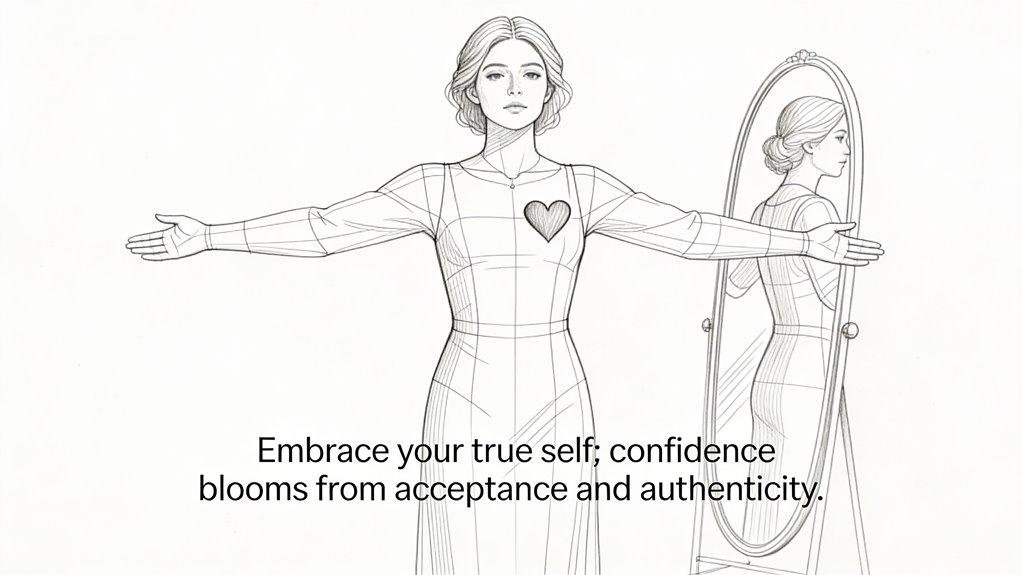
Confidence is that powerful feeling that can lift us up, make us stand taller, and help us face life’s challenges head-on. It’s vital to understand that confidence comes in different types. Self-confidence, for instance, is our trust in our own capabilities and judgment.
When we believe in ourselves, we open doors to numerous confidence benefits, like improved mental well-being and better performance in various tasks. Imagine exploring a project without second-guessing ourselves! We grow our confidence through experiences and feedback, shaping our self-concept positively over time. Additionally, it’s important to recognize that self-confidence is a skill that can be developed through various therapeutic methods and personal efforts.
Understand the Effects of Low Self-Esteem
When we talk about low self-esteem, we can’t overlook how this affects our mental health and social lives. This often creeps in and whispers negative things in our ears, making us feel anxious or even leading towards isolation from the friends we cherish. Low self-esteem’s long-term consequences may include poorer educational and occupational outcomes, reinforcing the need to address these feelings early on.
But recognizing these patterns is the initial step; together, we can find ways to lift ourselves up, celebrate our strengths, and build connections that truly matter.
Impact on Mental Health
Determining the intricate terrain regarding mental health can often feel overwhelming, especially when low self-esteem casts a shadow over our daily lives. Low self-esteem isn’t just a fleeting feeling; it considerably ties into anxiety and depression. We might find ourselves battling feelings of worthlessness or sadness, which can exacerbate these mental health issues.
Statistics show that students with low self-esteem are twice as likely to experience anxiety. High self-esteem serves as a protective factor against these symptoms, emphasizing the importance of fostering a positive self-image early on. It’s essential we recognize these patterns early. Each time we practice self-compassion, we interrupt the cycle that low self-esteem creates. Let’s remind ourselves that seeking help isn’t a sign of weakness; it’s an act of courage.
Together, we can break the stigma around low self-esteem and cultivate healthier mental well-being.
Influence on Social Relationships
Low self-esteem can enter our lives like an unwanted guest at a party, affecting not just our mental health but also the relationships we cherish. We’ve all felt that urge to pull away from our loved ones, fearing rejection or judgment; it’s a tough cycle. When we lack social support, we withdraw, leading to plummeting relationship quality. It’s like trying to fill a bucket with holes; the more we distance ourselves, the more we feel isolated. But here’s the silver lining: embracing our authentic selves nurtures profound connections. Research shows that self-esteem and social relationships reciprocally predict each other over time; as we build our confidence, we enhance our connections with others.
Instead of spiraling, let’s engage actively with friends and family. Share our thoughts, seek support, and celebrate each other’s victories. Together, we can break the cycle and build healthier, more fulfilling relationships.
How to Recognize and Overcome Negative Self-Talk?
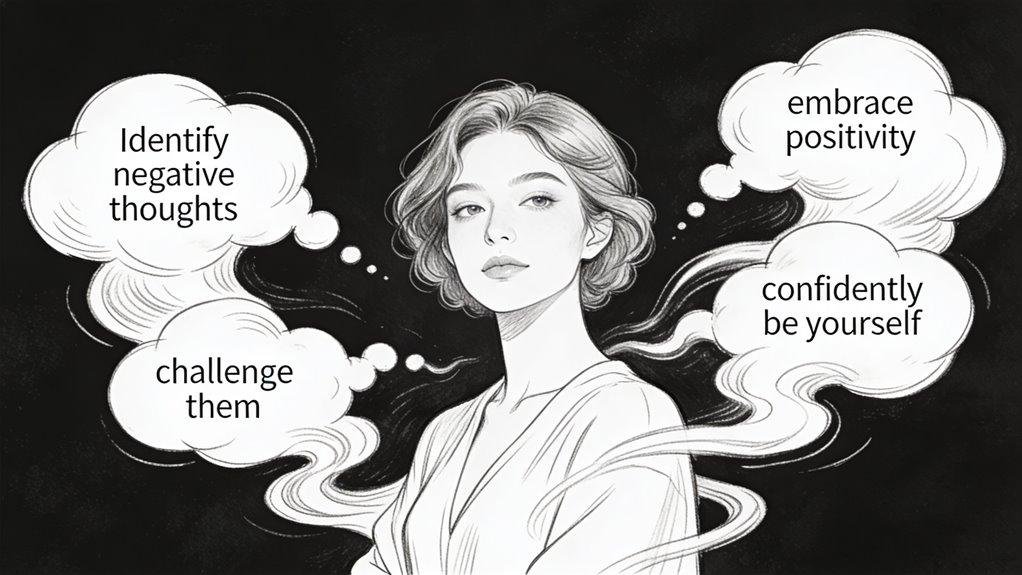
Negative self-talk can be a sneaky little gremlin that creeps into our minds, often without us even realizing. We might hear that inner critic whispering, “I can’t do that,” overriding any self-belief. To tackle this, we can practice negative thought recognition. Let’s visualize those pesky thoughts as clouds floating overhead, notice them without judgment, and let them drift away.
Next, we can employ positive affirmation techniques. After catching a negative thought, replace it with three uplifting statements about ourselves, such as “I’m improving daily” or “I made progress today.” Remember, we all slip into self-doubt, especially considering that 3 out of 5 girls reported feelings of sadness or hopelessness in 2021, so let’s support each other. With time and practice, we’ll replace the gremlins with confident, encouraging voices that drive us forward!
Celebrate What Makes You Unique
Celebrating what makes us unique isn’t just a feel-good mantra; it’s a powerful foundation for building our confidence and improving our lives. When we accept individual expression, we acknowledge our distinct traits and experiences. This promotes a richer understanding of our personal identity.
Here’s how we can celebrate our uniqueness:
| Ways to Celebrate Uniqueness | Benefits |
|---|---|
| Share your passions | Builds community and connection |
| Showcase your style | Improves self-expression |
| Discover new hobbies | Expands personal growth |
| Acknowledge your strengths | Raises self-esteem |
| Support others’ uniqueness | Cultivates a positive environment |
Set Achievable Goals to Foster Personal Growth
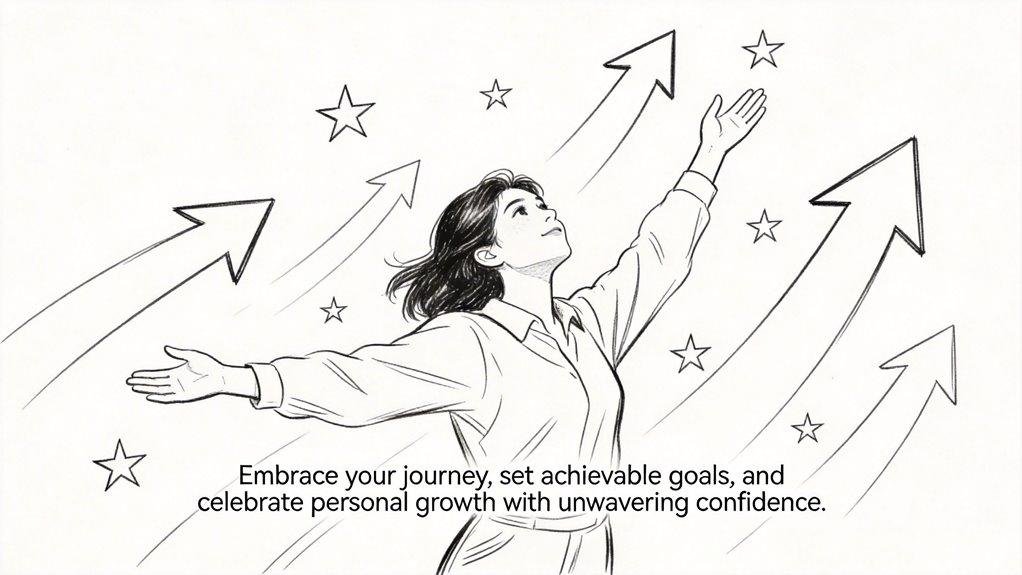
Setting achievable goals is crucial for personal growth, and when we prioritize them, we can change our dreams into reality. Let’s adopt goal setting by following the SMART structure: our goals should be specific, measurable, attainable, realistic, and time-bound.
For instance, instead of saying, “I want to get fit,” we can say, “I’ll jog for 20 minutes three times a week.” Writing our goals down elevates our success rates by 33%, making them feel more tangible. Breaking them into micro-goals, like saving $10 each week, makes progress manageable and builds our confidence.
Additionally, let’s establish accountability by sharing our goals with a friend, it’s way more fun! Remember, we’re in this together, and every small step counts!
Build a Network of Supportive People
Constructing a network of supportive individuals can feel like assembling a cozy blanket fort, when we have the right connections, we create a safe and nurturing space where we can truly be ourselves. By focusing on building connections, we open ourselves to accept life more fully. It’s not just about the number of friends we have; quality matters.
A few close relationships provide far more emotional support than a crowded social calendar. Regularly reaching out, whether through messages or meetups, helps nurture these ties. Additionally, diverse supportive networks can expose us to fresh viewpoints, enhancing our confidence. Let’s make genuine connections, knowing that when one of us shines, we all do. So, who’s ready to build that blanket fort together?
Embrace Authenticity and Be True to Yourself
Let’s take a moment for celebrating our uniqueness and all the quirks that make us who we are. When we express ourselves freely, this not only brightens our own day but helps others feel comfortable doing the same, think about this as creating a ripple effect from authenticity.
Celebrate Your Uniqueness
Have you ever paused to think about what makes you truly unique? We all have unique traits that deserve celebrating, and recognizing these differences can spark some serious personal growth. Embracing our individuality not only enhances our self-esteem but nurtures profound connections with others.
Think about it, when we highlight what makes us special, we invite genuine relationships into our lives. Let’s stop the self-criticism and focus around what brings us joy! Imagine gathering with friends, sharing your quirks and preferences, and laughing about how varied we truly are.
Together, let’s celebrate the beauty in our differences. By doing so, we develop a positive mindset that inspires confidence and creativity. It’s time to love who we are!
Express Yourself Freely
Embracing our uniqueness naturally leads us toward the power for self-expression. When we share authentic expression through social media, we create joyful moments via personal storytelling and artistic pursuits.
Let’s uncover how vulnerability sharing can spark emotional release and nurture profound connections. By engaging in mindful communication, we find our voices and investigate self-discovery together.
Whether it’s through a heartfelt post or a creative outlet, let’s commit to expressing ourselves freely. Remember, the world isn’t just waiting for perfection, it craves the raw, unfiltered versions of us! So, let’s take that leap, showcase our authentic selves, and inspire others along the way.
Together, we can make social media a space for authenticity and support, uplifting our well-being in the process.
Practice Self-Compassion Daily
Practicing self-compassion daily can feel like a warm hug during a cold day, comforting, necessary, and utterly revitalizing. By incorporating self-compassion practices into our daily routines, we build resilience and create a strong foundation for mental well-being. Whether through mindful journaling, meditation, or just taking a moment to breathe, we can nurture our inner selves.
| Self-Compassion Practice | Benefits |
|---|---|
| Daily Mindfulness Meditation | Reduces stress and improves well-being |
| Self-Compassion Journaling | Increases self-awareness and growth |
| Body Scan Exercises | Promotes emotional recovery |
| Compassionate Breathing | Eases anxiety and fosters calm |
Let’s accept these practices, knowing that our authenticity blossoms when we treat ourselves with kindness. Remember, practice makes progress, not perfection.
Frequently Asked Questions
How Can I Maintain Confidence in Challenging Situations?
We can maintain confidence in challenging situations by practicing resilience training and using positive affirmations. Together, we’ll remind ourselves that each setback is an opportunity for growth, enabling us in facing adversity with strength and assurance.
What Role Do Hobbies Play in Building Self-Esteem?
Hobbies play an essential role in building self-esteem by nurturing personal growth and creative expression. Engaging in diverse activities strengthens our confidence, helps us develop new skills, and creates a supportive community that uplifts us.
How Does Body Language Affect Self-Confidence?
Body language greatly affects our self-confidence. By maintaining an open posture and using positive facial expressions, we project strength and assurance, enhancing how we feel and how others perceive us in various situations.
Can Volunteering Improve My Self-Esteem?
Absolutely, volunteering benefits us by elevating our self-esteem and creating meaningful community connections. As we engage, we gain confidence, feel accomplished, and enjoy a profound sense of belonging that enriches our overall well-being.
How Do Cultural Differences Influence Confidence Levels?
Cultural differences shape our confidence levels considerably. Our cultural identity often dictates societal expectations, leading us to express confidence variably. Understanding these influences helps us guide our self-perception and communal interactions more effectively.
