


We all know that fear of not being good enough can be a tough nut to crack.
Initially, let’s recognize that impostor syndrome often creeps in, convincing us we’re frauds. It’s okay to feel that way!

By addressing negative self-talk and shifting from a perfectionist mindset to celebrating our progress, we can build self-esteem.
Let’s accept vulnerability, seek support from friends, and set realistic goals.

Trust us, it gets better, there’s so much more to discover together!
Key Takeaways
- Acknowledge your feelings of inadequacy and recognize that self-doubt is common among high-achievers.
- Replace negative self-talk with affirmative statements to challenge cognitive distortions and boost confidence.
- Set realistic, specific goals and celebrate incremental wins to reinforce your capabilities and progress.
- Embrace vulnerability by sharing your struggles with trusted friends, which helps reduce shame and builds support.
- Foster a growth mindset by viewing challenges as opportunities for growth and reframing mistakes as learning experiences.
What Is Impostor Syndrome and How Does It Affect Self-Worth?

Although many of us experience moments of self-doubt, when these feelings become a constant presence, we might be wrestling with what’s known as impostor syndrome. This impostor phenomenon often leads us to question our abilities, making us feel like frauds, even when our successes are undeniable. We might credit our achievements to luck rather than our hard work, undermining our self-worth.
As we cycle through these doubts, we tend to compare ourselves to others, which further erodes our confidence. It’s a tough dance that leaves us feeling inadequate. To combat this, let’s recognize our accomplishments, accept praise graciously, and welcome our unique paths, particularly since impostor syndrome is commonly linked to high-achieving individuals. After all, everyone feels out of place occasionally, just think of it as trying on a new pair of shoes!
Common Signs of Impostor Syndrome
We all know that nagging feeling of self-doubt that can creep in, making us question our worth and capabilities. Negative self-talk has a way of amplifying our insecurities, turning small hiccups into monumental failures in our minds. Let’s talk about these common signs of impostor syndrome, and how we can shift that inner dialogue to be more supportive and kind, because we’re all a work in progress, and that’s perfectly okay! One such sign is fear of failure, which can lead us to hesitate in sharing our ideas or taking action on important tasks.
Self-Doubt and Insecurity
When we begin regarding our own capabilities, this can feel like we’re stuck in a never-ending loop regarding self-doubt and insecurity, especially in a world that seems to celebrate perfection. About 58% of us grapple with imposter syndrome, and this often surfaces in our lives, particularly in high-pressure environments. Workers experiencing imposter syndrome often fear that discussing their self-doubt will make them appear less capable.
In order to tackle this, we can use self-reflection techniques. Let’s take a moment each week to jot down our wins and remind ourselves of our strengths. When faced with criticism, we don’t need to take it personally; instead, we can view this as an opportunity for growth. By sharing our experiences, we not only lighten our load but also realize we’re not alone. After all, we’re all just trying to figure it out!
Negative Self-Talk Patterns
Negative self-talk patterns can sneak up at us, often disguised as harmless thoughts, but they’re like uninvited guests at a party, overstaying their welcome and bringing down the mood. We might catch ourselves blaming our mistakes for a lack of talent or fearing judgment from others. Recognizing these cognitive distortions is the initial step toward combating them. Negative self-talk can arise from childhood experiences and societal pressures that shape our beliefs about success and inadequacy.
Here’s a quick overview:
| Negative Self-Talk | Cognitive Distortion |
|---|---|
| “I’m always messing up!” | All-or-nothing thinking |
| “I’ll never be good enough.” | Fortune telling |
| “Nobody cares what I do.” | Mind reading |
| “I’ll be a failure.” | Magnification/catastrophizing |
Let’s challenge these thoughts together and replace them with affirming ones. We’re more capable than we think!
How Perfectionism Fuels Feelings of Inadequacy
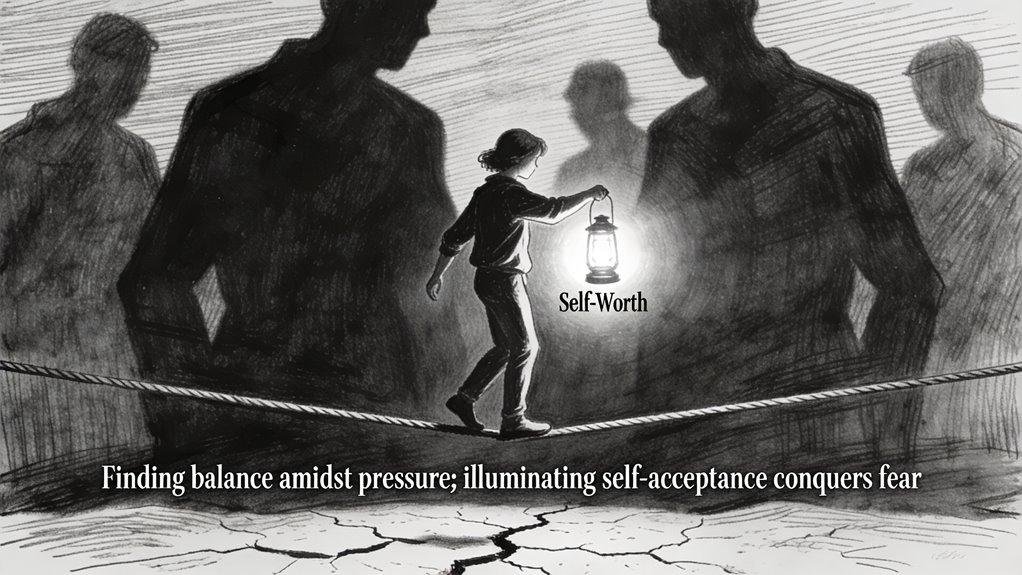
Perfectionism often masquerades as a noble pursuit, but such can instead cast shadows over our lives filled with inadequacy. When we set impossibly high standards, we inadvertently trigger feelings of failure and self-doubt. It’s like playing a game with rules we can never fully understand, no wonder we feel exhausted! This tendency to set excessively high standards can lead to negative mental health outcomes, including anxiety and depression. Those pesky emotional distress symptoms creep in, fueling a cycle of negative self-talk. We might think, “I’m just not good enough,” which only magnifies our pain. Instead, let’s focus on progress over perfection. Practicing self-compassion and embracing our imperfections can lighten this heavy burden.
Building Self-Esteem to Overcome Impostor Syndrome
When we recognize our achievements, nonetheless small they may seem, we start to build a foundation for self-esteem that can help combat impostor syndrome. It’s like giving ourselves a high-five for showing up, so let’s set realistic goals that motivate us rather than overwhelming us.
And hey, practicing self-compassion isn’t just a fluffy idea; it’s a powerful tool that reminds us we’re allowed to be human, imperfections and all!
Recognize Your Achievements
Acknowledging our accomplishments isn’t just a pleasant activity; it’s a powerful tool in developing self-esteem and overcoming that pesky impostor syndrome. When we celebrate even the smallest achievements, like completing a project or ultimately organizing our desk, we build a solid foundation for self-worth.
We can employ self-praise strategies such as success journaling, writing down three things we did well each night to reinforce our capabilities. Additionally, collecting and revisiting positive feedback from friends adds tangible proof against our doubts. By creating a personal inventory of strengths, we remind ourselves about our unique talents. Let’s shift our focus from failures to these accomplishments, and soon enough, the narrative of inadequacy will feel like a distant memory!
Set Realistic Goals
Having recognized our achievements, we can now shift gears and focus on setting realistic goals that enable us in overcoming feelings pertaining to inadequacy. One effective approach is implementing SMART goals. They’re Specific, Measurable, Achievable, Relevant, and Time-bound, giving us clarity and helping us track our progress.
Let’s break our ambitions into smaller milestones, this turns mountains into molehills and celebrates those mini victories!
| Goal Setting Strategies | Milestone Tracking |
|---|---|
| Focus concerning what you can achieve | Celebrate small wins |
| Adjust goals as needed | Visualize your progress |
| Set short-term targets | Regularly evaluate goals |
| Stay motivated and engaged | Document your growth |
Practice Self-Compassion
Self-compassion is our hidden superpower when we deal with battling feelings of inadequacy and overcoming impostor syndrome. By treating ourselves with kindness, we can nurture kindness and encourage resilience.
Let’s examine some self-compassion techniques that can help:
- Recognize our critical inner voice without judgment.
- Challenge negativity by asking, “Would I talk to a friend this way?”
- Use mirror exercises to speak comforting words to ourselves.
- Keep gratitude journals to appreciate our strengths daily.
- Welcome self-compassion breaks that remind us that struggle is normal.
As we practice these techniques, we create a nurturing space for growth, allowing our self-worth to flourish, independent from comparisons. Remember, it’s okay to be imperfect, we’re all in this together!
How to Develop a Growth Mindset to Tackle Self-Doubt?
When we face self-doubt, this challenge can feel like a heavy fog, making even the simplest tasks seem intimidating. In order to tackle this, we can develop a growth mindset, which welcomes challenges and sees effort as a pathway to improvement. Let’s use mindset strategies that focus on learning opportunities rather than perfection.
When we stumble, let’s reframe those mistakes as stepping stones, helping us grow stronger. Imagine our brains as muscles, getting stronger with use! Surrounding ourselves with growth-minded friends can also enhance our motivation. Additionally, remember, even the biggest successes come after some creative problem-solving and light-hearted risks. So, let’s step out of our comfort zones together, and watch our confidence soar!
How to Embrace Vulnerability and Seek Support?

Accepting vulnerability is a little like stepping out from a cozy blanket in a chilly morning, it’s uncomfortable initially, but oh, the warmth that follows! By recognizing our vulnerabilities, we pave the way for profound connections and support networks.
Let’s lean into this together:
- Share our struggles with trusted friends; it reduces shame.
- Celebrate imperfections as they improve our authenticity.
- Open up about feelings to strengthen bonds and build trust.
- Seek support actively; we’re not alone in this experience.
- Practice self-compassion to nurture empathy for ourselves and others.
When we accept vulnerability, we not only enhance our mental health but also invite growth and resilience. So, let’s reach out, share, and create a community that values acceptance and support!
What Realistic Goals Can Help Combat Impostor Feelings?
Setting realistic goals isn’t just a suggestion, it’s a game changer when it comes to overcoming those pesky impostor feelings. By establishing achievable benchmarks, we take the pressure off ourselves. Instead of seeking perfection, we can focus upon realistic milestones that highlight our progress.
Think about setting specific and time-bound goals. For instance, if we’re learning a new skill, instead of trying to master it in a week, let’s aim for smaller, bite-sized objectives. In this way, we celebrate our incremental wins and reinforce our confidence.
Additionally, tracking our progress helps us visualize improvements without the emotional rollercoaster. Remember, mistakes are just learning opportunities, not evidence of inadequacy. Let’s accept that mindset together, and watch the impostor feelings fade!
Exercises to Combat Inadequacy
Overcoming feelings of inadequacy requires more than just acknowledging our fears; this also calls for actionable steps that help us confront those feelings head-on. Let’s welcome some exercises that can change our relationship with inadequacy:
- Practice mindfulness to stay present, setting aside judgment.
- Engage in fear mapping by writing down our specific fears and possible outcomes.
- Try new hobbies in low-stress environments to experience and accept failure.
- Join group activities to get comfortable with performance anxiety and social interactions.
- Develop emotional resilience by sitting with uncomfortable feelings and recognizing them as normal.
These steps not only help us face inadequacy but also make the path a little lighter, because we’re all navigating this together!
Frequently Asked Questions
Can Impostor Syndrome Affect My Career Advancement Opportunities?
Absolutely, impostor syndrome can hinder our career growth and undermine our professional confidence. By doubting our abilities, we might avoid opportunities, limit our visibility, and essentially stall our advancement despite our skills and achievements.
Is There a Connection Between Social Media and Feeling Inadequate?
Yes, there’s a clear connection between social media and feeling inadequate. Constant social comparison can distort our self worth, leading us to feel less precious than others, especially among teenagers traversing these platforms.
What Role Does Family Background Play in Impostor Syndrome?
Family background shapes our impostor syndrome through childhood experiences and family expectations. If we faced hypercritical parenting or lack in guidance, we’re more likely to struggle with feelings related to inadequacy, impacting our self-worth today.
How Can Cultural Factors Influence Feelings of Inadequacy?
Cultural expectations can amplify identity pressures, making us feel inadequate. We often compare ourselves with societal norms, leading to doubts regarding our worth. Understanding these influences helps us steer our feelings and cultivate a stronger sense of self.
Are There Specific Industries More Affected by Impostor Syndrome?
Creative industries and academia feel heightened impacts of impostor syndrome, as we steer unyielding pressures. Similarly, in corporate environments and tech fields, expectations often overwhelm us, making feelings of inadequacy a common struggle among professionals.
