


We all have our off moments, but living in delusion often shows up through persistent emotional struggles and isolation.
You might notice a tendency to withdraw or feel defensive when challenged.

Engaging with those we trust can help open doors, but mistrust creates barriers.
Remember, it’s okay to feel overwhelmed; even the most skeptical among us might misinterpret situations.

Taking small steps, like reaching out for help, can lead us back to clarity and connection.
Stick around, and we’ll share some more understandings.
Key Takeaways
- Behavioral isolation occurs, resulting in fewer social invitations and vague conversation excuses.
- Increased suspicion and agitation lead to heightened emotional struggles and anger when beliefs are questioned.
- Withdrawal from social settings deepens loneliness and fosters feelings of rejection in relationships.
- Difficulty concentrating and mood swings hinder work performance and disrupt daily tasks.
- Lack of self-awareness prevents recognition of problematic behaviors, exacerbating anxiety and distress cycles.
Recognizing Behavioral Signs of Delusion
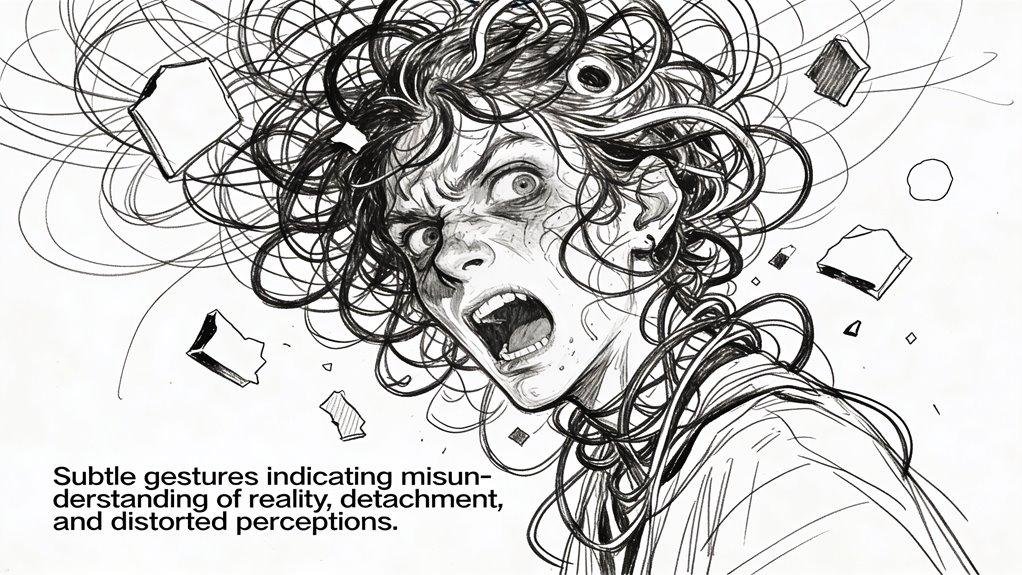
When we think about the signs of living in delusion, it’s easy for us to overlook how our behavior can reveal what’s really happening beneath the surface. Behavioral isolation often creeps in, causing us to decline social invitations and cut conversations short with vague excuses. We might feel discomfort, leading us to avoid certain people or places altogether.
When our delusions are challenged, we may react defensively, feeling anger over harmless remarks. We could twist innocent events into imagined threats, misinterpreting glances as surveillance. Lack of self-awareness is common, which may prevent us from recognizing these behaviors as problematic. To break free, we should seek honest conversations, surround ourselves with supportive voices, and confront the defensive reactions that keep us isolated. Remember, everybody deserves connection, even when embracing the truth feels intimidating!
Emotional Signs of Delusional Thinking
Living in a state of delusion can stir up a whirlwind of emotions that often feels overwhelming. We might find ourselves caught in anxiety triggers and distress cycles, where fear and agitation become our daily companions.
Envision waking up, heart racing, convinced someone’s out to get us; it’s exhausting! Delusional disorder often leads individuals to experience an increased sense of suspicion and anxiety, compounding their emotional struggles. Anger may also bubble up when our beliefs are challenged, often leaving us feeling uncharacteristically defensive. And, let’s not forget that mistrust can change simple interactions into complex puzzles of loyalty.
Recognizing these emotional signs is essential. It’s like shining a light in a dark room; awareness can be the initial step toward reclaiming our peace. Taking a breather, reaching for support, or even sharing a laugh can help us steer through these tumultuous feelings.
Social Consequences of Delusions on Relationships
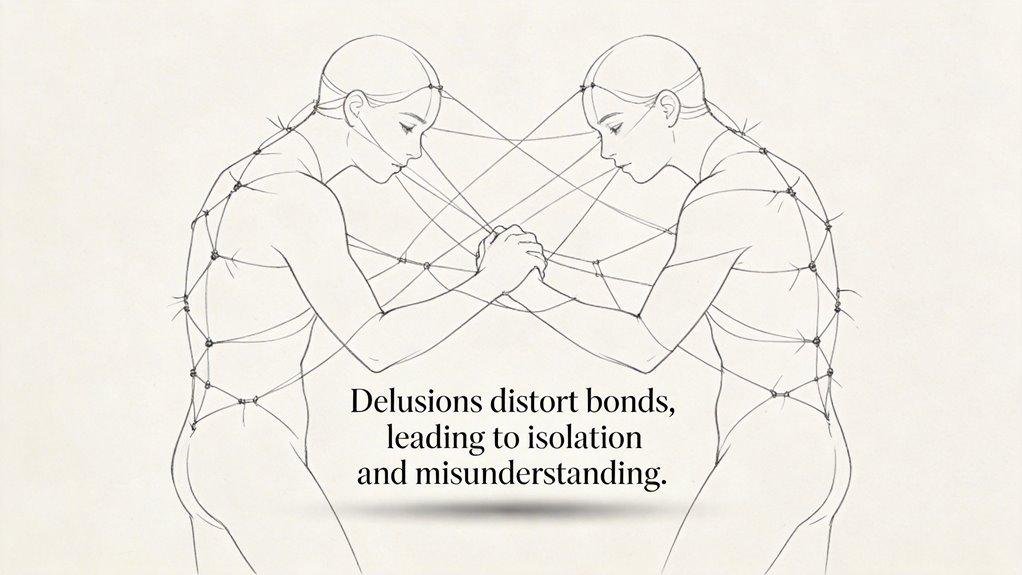
Experiencing the emotional turmoil from delusional thinking doesn’t just affect our inner world, that ripples out, influencing our relationships in ways we might not even realize. We may find ourselves feeling socially isolated, creating network interactions that limit our support and connection. Such isolation often leads to a cycle of loneliness, leaving us trapped in our thoughts.
Think of it this way: the more we withdraw, the less others reach out. Sharing delusions can form a “pseudocommunity,” where our closest relationships lack balance and reciprocity. In order to break free, we can start by opening up with trusted friends, seeking balanced exchanges, and reaching out for professionals for guidance. Shared psychotic disorder can significantly hinder our ability to connect with external support, emphasizing the importance of addressing these dynamics. Small steps toward connection can help reestablish our network. Let’s welcome connection!
Cognitive Patterns of Delusional Thinking
As we investigate the cognitive patterns behind delusional thinking, it’s important to keep in mind that everyone can find themselves stuck in a loop of non-bizarre beliefs at times. We all know that feeling when we’re convinced something’s true, even when evidence says otherwise, like believing it’s going to rain just because you left your umbrella at home. Results indicate that cognitive biases are significantly linked to the severity of persecutory delusions. Embracing the idea that poor understanding doesn’t define us can open the door to healthier viewpoints, allowing us to question those pesky thoughts rather than just accepting them.
Non-Bizarre Delusions Explained
While this might sound surprising, non-bizarre delusions can affect nearly anyone, turning everyday life into a puzzling maze of false beliefs that feel very real for those experiencing them. These fixed beliefs, often plausible yet untrue, can persist for at least a month. This persistence can lead to potential diagnosis. Individuals often function normally outside of these delusions, which can make them difficult to identify in everyday interactions.
Here are some non-bizarre examples we might encounter:
- Believing someone is watching or following us.
- Thinking a famous person is secretly in love with us.
- Feeling that an external force controls our actions.
- Assuming loved ones are unfaithful without clear evidence.
Understanding these diagnosis criteria helps us see that, despite their unlikelihood, these delusions can feel convincingly true. Let’s welcome clarity and compassion as we maneuver through these intricacies together!
Impact of Poor Insight
Understanding the impact of poor comprehension regarding cognitive patterns of delusional thinking can be a bit of a journey, one that leads us down the twisting paths within our minds. Let’s investigate how cognitive distortions shape our perceptions:
| Cognitive Distortion | Impact on Beliefs |
|---|---|
| Jumping to Inferences | Rapid acceptance of implausible ideas |
| Impaired Belief Flexibility | Inability to revise beliefs with evidence |
| Focus Dysfunction | Skewed focus on irrelevant stimuli |
These biases trap us in rigid thinking. We might cling to fixed ideas, mistaking them for reality. By recognizing these cognitive patterns, we can gradually improve our understanding. Let’s take a step back, question our assumptions, and adopt openness to different viewpoints. After all, a little self-reflection goes a long way!
Understanding Persecutory Delusions and Their Effects
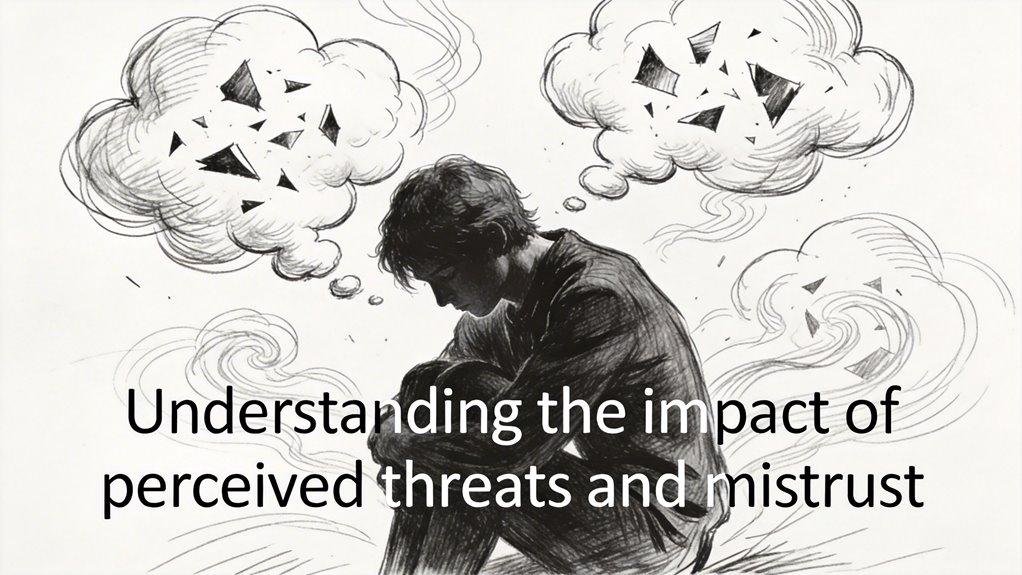
As we investigate persecutory delusions, we may find ourselves wrestling with the causes and the emotional rollercoaster that comes alongside them. We all know how it feels to worry, but imagine living in a world where every glance feels like a threat, that’s the weight of these beliefs.
Let’s talk regarding how these delusions can impact our relationships and work life, and maybe share a laugh or two about the absurdity of unfounded fears along the journey.
Causes Of Persecutory Delusions
Persecutory delusions can creep into our lives surprisingly quickly, often rooted in a complex web of psychological, social, and biological factors that twist our perception regarding reality. These delusions can leave us feeling isolated and uncertain. Understanding their causes helps us maneuver through this challenging path together.
- Psychological factors, like low self-esteem, can distort our views.
- Environmental triggers, such as traumatic experiences, may heighten our fears.
- Chronic anxiety and over-sensitivity can make us misinterpret neutral situations.
- Substance use can exacerbate these delusional beliefs.
While it’s tough, recognizing these influences allows us to seek support and build resilience. Remember, we’re not alone in this experience, and understanding is the initial step toward healing. Let’s take it one step at a time!
Emotional Consequences and Responses
When we find ourselves wrestling with persecutory delusions, it is easy to become overwhelmed by a swirling storm regarding emotions. Anxiety often tags along, making daily life feel like we are caught in a tireless downpour. We might find ourselves battling negative self-thoughts, leading to feelings of depression that can seem unshakeable.
But together, we can work upon anxiety management techniques, like mindfulness and profound breathing, to help calm that storm. Remember, it is okay to seek support from professionals. Just as the sun breaks through clouds, specialized therapy can lighten emotional burdens and reduce delusional beliefs.
Let us share our experiences, accept our feelings, and traverse this challenging expedition together, knowing we are not alone.
Impact On Relationships And Work
While this may sometimes feel like the world is closing in around us, relationships and work can greatly amplify the effects of persecutory delusions. The sense of persecution can strain our connections and hinder our work performance.
Here are some key impacts we might notice:
- Increased feelings of rejection can create emotional distance in relationships.
- Our perceived hostility from others can heighten anxiety during work interactions.
Struggles with sleep may lead to decreased focus and productivity at the job. Worrying about others’ intentions can distract us from exploring new ideas.
It’s essential to seek help, concentrate on rebuilding trust in ourselves and others, and address these persistent worries. By taking small, manageable steps, we can improve our relationships and work experience.
How Do Delusions Affect Daily Life?
Delusions can creep into our daily lives like an unexpected guest at a party, initially intriguing but soon causing chaos. They can lead to social withdrawal, impaired functioning, emotional distress, and behavioral changes. These effects unsettle our routines.
For example, delusions might make us feel isolated or anxious around others, as if we’re in a never-ending game of social chess.
| Impact Category | Description |
|---|---|
| Social Withdrawal | Anxiety over perceived conspiracies. |
| Impaired Functioning | Difficulty concentrating at work. |
| Emotional Distress | Mood swings and irritability. |
| Behavioral Changes | Fixations prompting inappropriate actions. |
Frequently Asked Questions
What Are Common Misconceptions About Delusions?
We often encounter myths surrounding delusions, such as equating them with madness or danger. In reality, these distorted beliefs can coexist with functionality, highlighting the complexity in human cognition and the need for understanding, not stigma.
How Can Friends Support Someone Experiencing Delusions?
We can support friends experiencing delusions by providing emotional support and employing effective communication strategies. Let’s listen actively, validate their feelings, and create a calm environment that encourages open dialogue and reassurance during challenging moments.
What Are the Psychological Causes of Delusional Thinking?
Psychological causes of delusional thinking often stem from cognitive biases and emotional trauma. We can struggle with rigid beliefs and exaggerated perceptions, making it essential to recognize these influences and seek understanding and support for ourselves.
Can Delusions Be Treated Effectively?
Yes, delusions can be treated effectively. We’ve found that combining cognitive therapy and medication improves outcomes remarkably, helping many regain control over their thoughts and enhancing their overall well-being.
How Do Cultural Factors Influence Delusional Beliefs?
Cultural beliefs and societal norms shape delusional beliefs considerably. They influence how we interpret experiences and perceive reality, reflecting profound values unique to our communities and impacting our mental health differently across various cultures.
